WarBrief Live | October 21, 2026 | Conflict Zone
Operation Vivaldi is Ukraine’s most significant counteroffensive of 2026: a five-month campaign by the 3rd Army Corps in northern Donetsk that, according to the corps, has retaken 277 square kilometers and 16 settlements. The Institute for the Study of War has concluded the campaign “defeated the 2026 Russian campaign to seize Donetsk Oblast.”
Key Takeaways
- Ukraine’s 3rd Army Corps says Operation Vivaldi reclaimed 277 sq km and 16 settlements across four phases (Sept 15 – Oct 14, 2026) — Ukrainian military claims not independently verified.
- The Institute for the Study of War assesses the operation defeated Russia’s 2026 campaign to seize Donetsk Oblast; Russia lost roughly 122 sq km between Sept 1 and Oct 16, erasing its net 2026 gains.
- Corps commander Brig. Gen. Andrii Biletskyi said on Oct 19 that Russia’s 144th Motorized Rifle Division had been shattered as a coherent fighting formation.
- Ukrainian forces have reached the Zherebets River east of Sloviansk, forcing Russia toward costly river crossings or frontal assaults on fortified lines.
Overview
Operation Vivaldi is the codename for a Ukrainian counteroffensive in the Lyman direction of northern Donetsk Oblast, run by the 3rd Army Corps under Brigadier General Andrii Biletskyi and publicly announced on September 15, 2026. Its objective was to push back the Russian effort to seize the town of Lyman as part of a wider pincer movement against Sloviansk and Kramatorsk, the two “fortress cities” anchoring Ukraine’s eastern defenses in what Kyiv calls the fortress belt. Rather than the sweeping maneuvers of the failed 2023 counteroffensive, the corps stacked small, methodical gains, dodging Russian minefields and avoiding exposure to air attack, per an analysis by Euromaidan Press. See the full campaign context on WarBrief’s conflict zones hub.
Key actors
- Ukraine’s 3rd Army Corps — the formation running the operation, commanded by Brig. Gen. Andrii Biletskyi.
- Russian 20th and 25th Combined Arms Armies — the Russian formations opposing the corps in the Lyman sector.
- Russia’s 144th Motorized Rifle Division — reported by Biletskyi on Oct 19 to have been shattered as an organized fighting force.
- The Institute for the Study of War — the Washington think tank whose October assessments judged Russia’s 2026 Donetsk campaign defeated.
- President Volodymyr Zelenskyy — who said on Oct 16 that Ukrainian positions are “the strongest they have been in a long time,” while warning Russian forces outnumber Ukraine’s six-to-eight-to-one in parts of the front.
Recent developments
- September 15, 2026: Biletskyi publicly announces Operation Vivaldi; initial reports confirm 75 sq km cleared and 10 sq km of captured territory liberated (New Voice of Ukraine).
- September 18–28, 2026: Russian losses force the withdrawal of Moscow’s Rubikon strike-drone detachment from the Lyman–Borova axis; the corps liberates Shandryholove, Derylove, Nove, Ridkodub and Katerynivka, bringing cumulative gains to 176 sq km (New Voice of Ukraine; Ukrainian military claims).
- October 14, 2026: Phase four announced — another 101 sq km and three villages (Zelena Dolyna, Lypove, Kolodiazi) recaptured, for claimed totals of 277 sq km and 16 settlements; Reuters could not independently verify the reports. The same day, Ukraine accused SpaceX of limiting Starlink services and crippling its drones (Reuters).
- October 19–20, 2026: Biletskyi says the 144th Motorized Rifle Division has ceased to exist as a coherent formation (New Voice of Ukraine); ISW’s October 20 assessment finds Russia lost roughly 122 sq km between Sept 1 and Oct 16, negating its net 2026 gains.
Current status
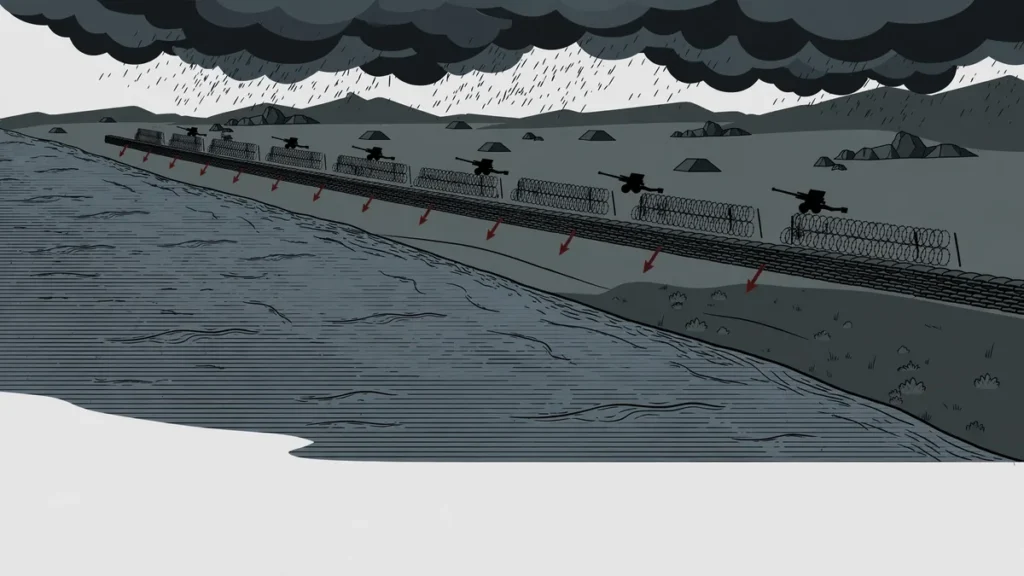
Ukrainian forces hold the Zherebets River, a natural defensive barrier east of Sloviansk and Kramatorsk. The shorter front lets Ukraine concentrate infantry more densely and use drones and artillery more effectively, while Russian forces must now cross the river to resume offensive operations toward Lyman, per ISW analysis reported by RBC-Ukraine. The operation wrecked Russia’s plan to bypass Lyman through Sviatohirsk and link up near Barvinkove with a second grouping advancing via the Dobropillya axis — a bid for a deep encirclement of the fortress belt that has collapsed. Caveats: no Russian official has acknowledged the losses, and the corps’ own breakdown distinguishes nine settlements retaken from occupation from seven cleared of infiltrating Russian forces.
What to watch
- Whether Russia reconstitutes the 144th Motorized Rifle Division or feeds in the reinforcements Zelenskyy says have arrived.
- The Starlink restrictions Kyiv blames for crippling drone operations, and the separate Starshield speed-limit dispute.
- Whether Ukraine consolidates along the Zherebets or expands the offensive — and how the parallel Dobropillya counteroffensive develops.
Frequently asked questions
What is Operation Vivaldi?
Ukraine’s 3rd Army Corps counteroffensive in the Lyman direction of northern Donetsk Oblast, publicly launched September 15, 2026 — aimed at breaking the Russian push toward Lyman and the Sloviansk–Kramatorsk fortress belt.
How much territory has Ukraine retaken?
The corps claims 277 sq km and 16 settlements; ISW independently estimates Russia lost roughly 122 sq km between September 1 and October 16. Ukrainian tallies have not been independently verified.
Has the operation succeeded?
By ISW’s assessment, yes in operational terms: it says the campaign defeated Russia’s 2026 plan to seize Donetsk Oblast and shattered the planned encirclement of the fortress belt. Russia has not publicly acknowledged the losses.
Sources
- Reuters: Ukraine frees more territory in Donetsk counteroffensive
- Al Jazeera: Ukraine advances in occupied Donetsk
- New Voice of Ukraine: Ukraine routs Russian division, retakes 122 sq km
- RBC-Ukraine: Operation Vivaldi defeats Russia’s 144th Motor Rifle Division
- Dagens: ISW says Ukraine defeated Russia’s 2026 Donetsk campaign
- Euromaidan Press: 3rd Army Corps took 2023 lessons into Operation Vivaldi