WarBrief Live | October 6, 2026 | Market Explainer
The Strait of Hormuz is still moving oil, but every tanker that crosses it now pays a war surcharge for the privilege. With at least seven vessels struck since September 28, insurers have turned the strait into one of the most expensive waterways on earth to insure — and that cost quietly lands in fuel, freight, and grocery bills. This war risk insurance explainer breaks down how the mechanism works, who actually pays the premium, and why shipping stays expensive even when crude keeps flowing.
Key Takeaways
- War risk insurance is a separate marine policy covering damage from warlike events — missiles, drones, mines, terrorism, piracy — that standard hull policies exclude.
- Vessels entering Joint War Committee “listed areas” must pay Additional War Risk Premiums (AWRP), priced as a percentage of hull value; Hormuz quotes have risen to several times their pre-war levels.
- Shipowners pay the base war-risk cover; charterers reimburse the additional premium under widely used war clauses such as CONWARTIME 2013 — and those costs flow into freight rates.
- Despite the attacks, Middle East crude exports topped pre-war levels on several days in late September, so the insurance surcharge, not a supply stop, is what keeps shipping costs elevated.
- One line disclaimer: this article explains insurance mechanics and market prices — it is not financial advice.
What happened in the Strait of Hormuz this week?
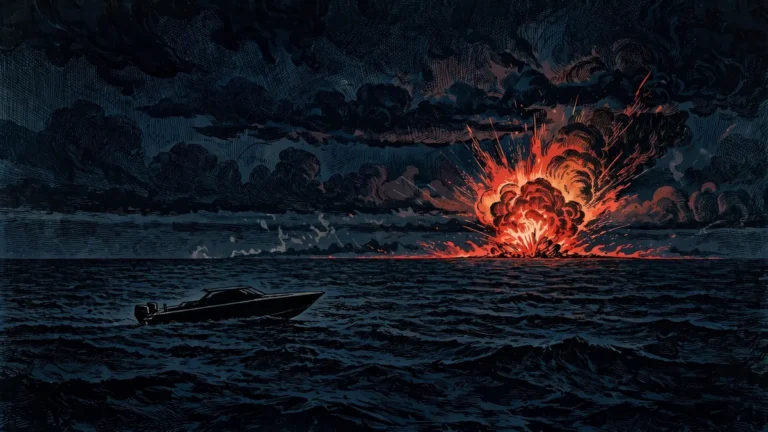
Attacks on commercial shipping in and around the Strait of Hormuz have continued into October. Shipping intelligence firm Marisks reported at least seven incidents in the strait, including the very large crude carrier Kazimah III, which was struck on October 1 by an unknown projectile and caught fire while operating in the strait; all crew were reported safe, Reuters reported on October 5, 2026.
The United Kingdom Maritime Trade Operations (UKMTO) agency has reported at least one attack a day in the Strait of Hormuz or the Gulf of Aden since October 2. On October 4, UKMTO published a notice that the Liberia-flagged aframax tanker Lipsi, managed by Dynacom and only delivered on August 24, 2026, had been struck by an unknown projectile in the strait, damaging its engine room. The US-led Joint Maritime Information Center listed up to four attacks in the strait in the 72 hours from October 2 to October 4, Riviera Maritime Media reported.
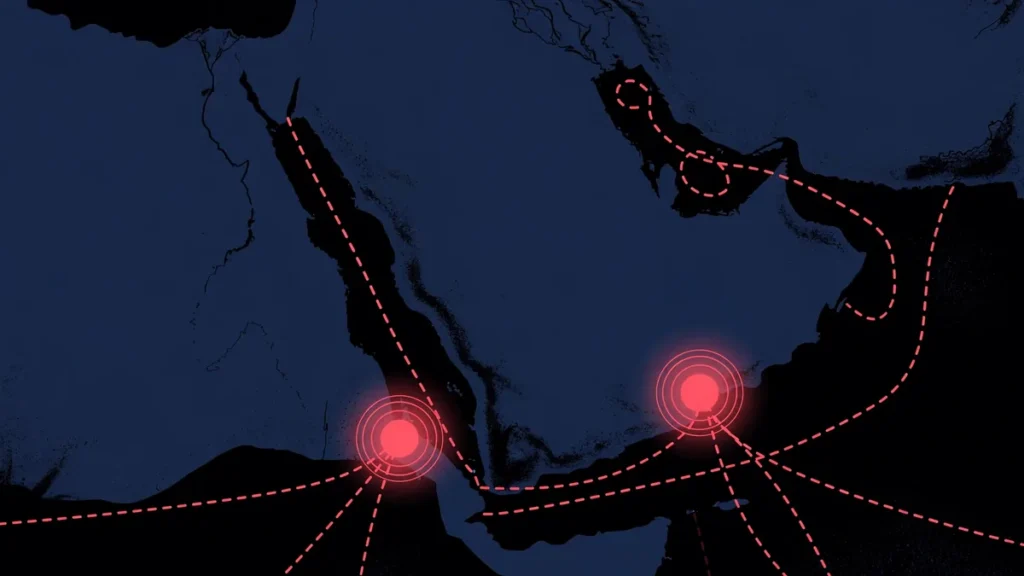
The violence has not stayed confined to Hormuz. Explosions were also reported near the tanker Chrystal Sky in the vicinity of the Bab el-Mandeb strait off Yemen’s coast, one detonation occurring roughly 100 metres from its starboard side, amid Yemen’s widening offensive against the Houthis. The vessel continued its voyage undamaged.
At the same time, oil is still flowing. Provisional data from ship-tracking firm Kpler showed Middle East crude exports above pre-war levels — between 19.5 million and 22.5 million barrels per day — on September 24 and again between September 27 and 29. Before the Iran war began on February 28, 2026, exports averaged about 18 million barrels per day. The paradox of full flows and rising danger is exactly why insurance, not cargo volume, is now the story: the strait that handled roughly 125 large commercial vessels a day and some 20 percent of the world’s daily crude oil and LNG supply has become a “kill box,” in the phrase Marisks used to describe an engagement area where weapons may lock onto any radar signature inside it.
What is war risk insurance?
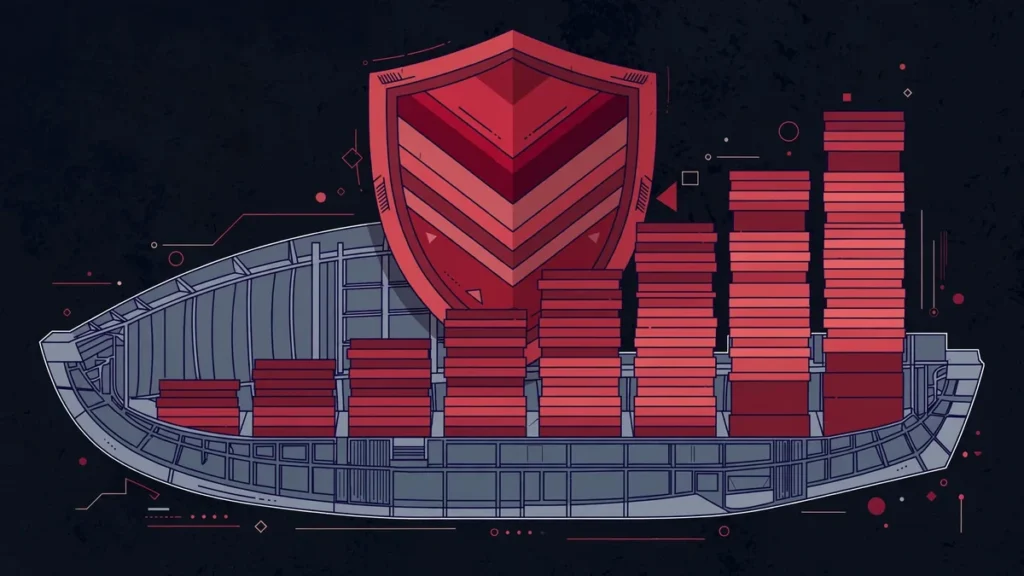
War risk insurance is a specialized marine insurance policy that covers physical damage to a vessel caused by war and warlike events — the things a standard hull and machinery policy deliberately excludes. Where an ordinary policy covers storms, collisions, and mechanical failure, a war-risk policy covers damage from missile and drone strikes, mines, terrorism, piracy, and military seizure, as Argus Media explains. It is distinct from protection and indemnity (P&I) cover, which handles liability to third parties, crew, and pollution — war-risk cover protects the ship itself and its machinery.
The reason it exists as a separate product is simple: wars are unpredictable and potentially catastrophic, and no ordinary underwriter can price them into a general policy without making everyday shipping unaffordable. War risks therefore get their own policy, their own clauses, and their own premiums — and the premium is only really charged when a ship goes somewhere dangerous.
That “somewhere dangerous” is formally defined. The International Underwriting Association of London and the Lloyd’s of London insurance market’s Joint War Committee (JWC) publish a list of “listed areas” — waters where extra precautions apply. Those areas currently include parts of the Black Sea, the Middle East, Africa, and South America. For waters deemed especially dangerous, insurers demand Additional War Risk Premiums (AWRP) on top of the standard war-risk cover. The Bab el-Mandeb strait and the Russian and Ukrainian sectors of the Black Sea are among the areas attracting AWRP, and without paying that extra premium, vessels are simply not insured to pass through them.
How does war risk insurance work?
The mechanics are straightforward, even if the pricing is not. A shipowner buys a war-risk policy as a standard part of the vessel’s insurance, usually renewed annually. That base cover is priced against a benign world — a ship sitting in safe waters. The moment the vessel is ordered into a listed area, underwriters attach an additional premium for that specific voyage, calculated as a percentage of the ship’s Hull and Machinery Value: the total insured worth of the vessel’s structure, engines, and equipment.
Rates move with the news, often daily. Before the latest round of strikes in the Middle East, AWRP for the Gulf stood at around 0.15 to 0.2 percent of hull value, according to brokers quoted by Argus Media in March 2026; after the strikes, regional rates surged to about 1 percent. By mid-September, two major brokers told Reuters that premiums for a seven-day Hormuz voyage had risen to 0.5 percent of hull value from 0.25 percent before the latest attacks — on a $100 million tanker, an extra $250,000 per voyage. Market commentary in late September put effective Hormuz quotes in a wide band, from roughly 1.5 percent of hull value upward depending on the vessel, its flag, its ownership, and its exact routing. On a $150 million VLCC hull, even a 1.5 percent rate means about $2.3 million of additional premium for a single transit, versus roughly $150,000 in normal conditions.
So who actually pays? The shipowner arranges and pays the base war-risk cover. The additional premium, however, is normally pushed to the charterer — the company that hired the ship and ordered it into the dangerous area. Widely used industry war clauses such as CONWARTIME 2013 and VOYWAR 2013 state this explicitly: charterers reimburse owners for any additional insurance premiums reasonably incurred as a consequence of orders to trade in war-affected areas, with the Hellenic Shipping News’s legal guidance confirming that charterers bear the AWRP for listed-area calls. Real charterparty contracts filed with regulators repeat the same formula — owners pay the basic annual war-risk contribution; the charterer pays the full additional premium for listed-area voyages.
There is a reason the charterer accepts this. In a time charter, the charterer decides where the ship goes; in a voyage charter, it decides the ports. The party giving the orders carries the extra insurance cost. That cost then flows into the freight rate the charterer charges for the cargo — and from there into the price of crude, refined products, and ultimately the goods consumers buy. As Vortexa analyst Ioannis Papadimitriou told Fortune in September, Hormuz insurance premiums had climbed to about 10 percent of the assets aboard from 0.5 to 1 percent before the war, “and those premiums are then passed down for the charterers to pay.”
By the numbers: Hormuz premiums in 2026
| Metric | Figure | Source |
|---|---|---|
| Incidents in/around Hormuz since Sept 28 | At least 7 vessels struck | UKMTO via Wall Street Journal; Marisks via Reuters (CONFIRMED) |
| Attack frequency since Oct 2 | At least one attack/day in Hormuz or Gulf of Aden | UKMTO via Reuters (CONFIRMED) |
| Middle East crude exports, Sept 24, 27–29 | 19.5–22.5 million bpd (above pre-war) | Kpler via Reuters (REPORTED — provisional data) |
| Strait’s pre-war share of global supply | ~125 large vessels/day; ~20% of world crude oil and LNG | Reuters, Oct 5, 2026 (REPORTED — single source) |
| AWRP, Mideast Gulf, early March 2026 | 0.15–0.2% of hull value → ~1% after strikes | Insurance brokers via Argus Media (REPORTED) |
| AWRP, seven-day Hormuz voyage, Sept 12 | 0.5% of hull value (from 0.25%) = ~$250,000 on $100M tanker | Two major brokers via Reuters (REPORTED via secondary) |
| AWRP, Hormuz, late September 2026 | ~1.5% of hull value and up; crude tankers ~5–5.75%, product tankers ~7–9% in some snapshots | Market reports via LinkedIn/ainvest (REPORTED — single secondary sources) |
| Gulf shuttle-run cost | $30–40M per run; ~$15–20/barrel extra excl. insurance | WSJ via Seoul Economic Daily, Oct 6, 2026 (REPORTED via secondary) |
| VLCC charter rate (pre-war → late Sept) | ~$231,400/day → over $1.2M/day | WSJ via Seoul Economic Daily (REPORTED via secondary) |
Caveat: CONFIRMED figures are corroborated by two or more reputable outlets; REPORTED figures come from a single source or a single data provider and should be treated as indicative.
Background and timeline
War risk premiums at Hormuz are a barometer of a war that has been escalating since the spring of 2026. The trajectory matters because it explains why premiums stay high even on days when oil flows freely.
- February 28, 2026: The US-Israeli war with Iran begins. Middle East crude exports had averaged about 18 million barrels per day between March 2025 and February 2026.
- March 2026: Several P&I clubs suspend shipowners’ war-risk insurance in the Middle East, and brokers report AWRP in the Mideast Gulf surging from 0.15–0.2 percent of hull value to around 1 percent ahead of US and Israeli strikes on Iran, according to Argus Media.
- July 20, 2026: Dynacom confirms its tanker Kavomaleas was struck by two projectiles of unknown origin off Oman; a second Dynacom vessel, the VLCC Acheloos, is also confirmed struck.
- September 12, 2026: Two major brokers tell Reuters that war-risk premiums for a seven-day Hormuz voyage have doubled to 0.5 percent of hull value.
- Late September 2026: Market commentary puts effective Hormuz quotes at roughly 1.5 percent of hull value and higher; VLCC charter rates on Gulf routes exceed $1.2 million a day.
- September 24, 27–29, 2026: Kpler data shows Middle East crude exports above pre-war levels at 19.5–22.5 million barrels per day.
- October 1, 2026: VLCC Kazimah III struck by an unknown projectile in the strait; fire onboard; crew evacuated safely.
- October 2–4, 2026: UKMTO and the Joint Maritime Information Center record up to four attacks in 72 hours; on October 4 the aframax Lipsi is struck in the engine room.
- October 4, 2026: Explosions reported near the tanker Chrystal Sky near the Bab el-Mandeb strait; IRGC Navy radio broadcasts a warning to ships not to use the strait’s “south corridor,” with the Wall Street Journal quoting the message as “Don’t trust U.S. Navy and don’t use south corridor at all and don’t put your life in danger.”
Why it matters
War risk insurance is the quiet mechanism that keeps energy flowing in wartime — and the reason it never gets cheap again quickly. Without it, lenders and charterers will not finance or hire a tanker into a listed area at all: “is war risk insurance mandatory?” is a question freight specialists answer with no in law but effectively yes in practice, because charterers and lenders typically require it for high-risk voyages. It is, in effect, the toll that lets the world’s most important oil artery keep functioning under fire.
It also explains the lag between geopolitical news and consumer prices. Premiums are set voyage by voyage, and underwriters reprice risk on incidents, not headlines. That is why freight stays elevated even as oil flows recover: Kpler data can show exports above pre-war levels while a single drone funnel strike, like the one reported on October 3, keeps underwriters pricing each transit as a potential total loss. Insurance costs, as one market analyst noted in September, are quoted gross of the headline freight rate — benchmarks like Platts’s tanker assessments exclude additional war-risk premiums — so the record rates celebrated in markets are the revenue number before subtracting the fastest-rising cost in the business.
Different perspectives
Underwriters see the strait as a pricing problem with no ceiling: if Iranian forces are firing missiles into a predetermined engagement area where “physical presence within the engagement zone at the relevant time could itself represent the primary exposure,” as Marisks wrote, then the risk attaches to the voyage itself, not the ship’s flag or cargo. Premiums therefore stay punitive regardless of diplomacy.
Shipowners and Gulf producers take the opposite view: the toll is simply the price of keeping oil moving. The Wall Street Journal reported that Saudi and other Gulf producers are running high-risk “shuttle runs” — VLCCs loading inside the Gulf and transferring cargo outside the strait — at $30 to $40 million per run, judging that paying the premium beats leaving the oil in the ground.
Iran‘s perspective is that the warning system is the pricing. The IRGC Navy has warned that safe passage exists only through routes it designates, and Rear Admiral Ali Fadavi said on October 4 that captains transiting the southern route have formally objected to it but are forced through by insurance, financial, and liability concerns — while the IRGC Navy warns that vessels on that route may be targeted at any point.
Consumers never see the insurance line item. But when a $2.3 million war-risk premium is added to a single VLCC transit, that cost is amortized across roughly two million barrels of crude and passed down the chain — refiner, distributor, pump, grocery shelf — in prices that react to freight with a lag of weeks.
What this means for US/UK/EU readers
For American, British, and European readers, the Hormuz insurance surcharge arrives as background inflation, not as a headline. Fuel prices are the most direct channel: crude that cost $15 to $20 more per barrel just to move through the shuttle system (excluding insurance, per the Journal) feeds into refinery margins and then into petrol and diesel. European diesel — the fuel of trucking, farming, and delivery fleets — is especially exposed because Europe’s refineries and import routes lean on Middle Eastern crude and product flows.
Groceries and consumer goods follow with a longer delay. Everything that arrives by sea — electronics from Asia, textiles, components — rides on freight rates that are still multiple times their peacetime level on Gulf routes, and war-risk premiums are embedded in those rates. Airline tickets feel it too: jet fuel pricing tracks crude, and aviation war-risk dynamics can mirror shipping’s. The counterpoint is worth remembering: because the physical oil keeps flowing, the price signal is a risk premium, not a shortage premium — which is why it can unwind quickly if underwriters conclude the shooting has stopped, and why it persists stubbornly while strikes continue even one a day.
What to watch next
Watch the Joint War Committee’s listed-areas updates and any broker chatter on AWRP levels: those are the earliest signals that underwriters think the danger is receding or worsening. Watch UKMTO’s daily notices — the attack count since October 2 is the data that moves premiums — and follow our intelligence reporting for more maritime-security analysis. Watch whether P&I clubs that suspended Middle East war-risk cover begin reinstating it, which would signal that professional risk-takers consider the worst over. And watch the October diplomatic track: if talks produce a durable de-escalation, premiums can fall as fast as they rose — but as long as missiles keep entering a “kill box,” the surcharge stays, no matter how many barrels make it through.
Frequently asked questions
What is war risk insurance for cargo?
It is specialized coverage for cargo losses caused by war, terrorism, and civil unrest that standard marine cargo policies exclude. Shipowners’ war-risk policies cover the vessel and machinery; cargo interests buy their own war cover, often via war and strikes clauses added to a standard cargo policy, with surcharges applying when the voyage enters a JWC listed area.
Does war risk insurance cover terrorism?
In most cases, yes — war-risk clauses typically cover damage from missile or drone attacks, mines, acts of terrorism, and piracy, though definitions of what counts as conflict-related damage vary between policies. Terrorism is generally treated as a warlike peril in marine war-risk wordings rather than as an excluded event.
How much does war risk insurance cost in 2026?
It is priced per voyage as a percentage of hull value. For the Mideast Gulf, brokers reported roughly 0.15–0.2 percent of hull value before the 2026 strikes and about 1 percent after; by mid-September a seven-day Hormuz transit was quoted around 0.5 percent, with late-September market references reaching 1.5 percent and higher depending on vessel, flag, and routing. One line to remember: this is market commentary, not financial advice.
Who pays war risk insurance — the shipowner or the charterer?
Both, in practice. The shipowner pays the base annual war-risk cover. Any additional premium triggered by entering a listed area is reimbursed by the charterer under widely used war clauses such as CONWARTIME 2013 and VOYWAR 2013, because the charterer is the party ordering the ship into danger. The charterer then passes that cost into freight rates, so consumers ultimately carry part of the bill.
Why are war risk premiums so high in the Strait of Hormuz?
Because underwriters price incidents, not flows. At least seven vessels have been struck since September 28 — with Marisks describing Iranian missiles being fired into a predetermined “kill box” — and UKMTO has reported attacks at a rate of one a day since October 2. Until the strike rate drops, insurers will keep quoting each transit as a potential total loss, which is why premiums stay elevated even when crude exports run above pre-war levels.
Sources
- Reuters: Middle East crude oil exports exceed pre-war levels but tanker attacks increase (Oct 5, 2026)
- Riviera Maritime Media: Dynacom newbuild Aframax tanker among multiple vessels hit in Strait of Hormuz
- Argus Media: Explainer — War risk insurance and AWRP
- Jalopnik (citing Wall Street Journal): 7 Oil Tankers Attacked In Strait Of Hormuz, As U.S. Official Admits Iran’s Targeting Abilities Keep Improving
- Hellenic Shipping News: War in Ukraine — impact on contractual obligations (CONWARTIME 2013 / AWRP liability)
- SEC (charterparty filing): War Risk Premium clause — charterers reimburse additional war-risk premiums
- Seoul Economic Daily (citing Wall Street Journal): Gulf Producers Pay $40 Million for Risky Hormuz Shuttle Runs (Oct 6, 2026)