WarBrief Live | November 19, 2026 | Country Profile
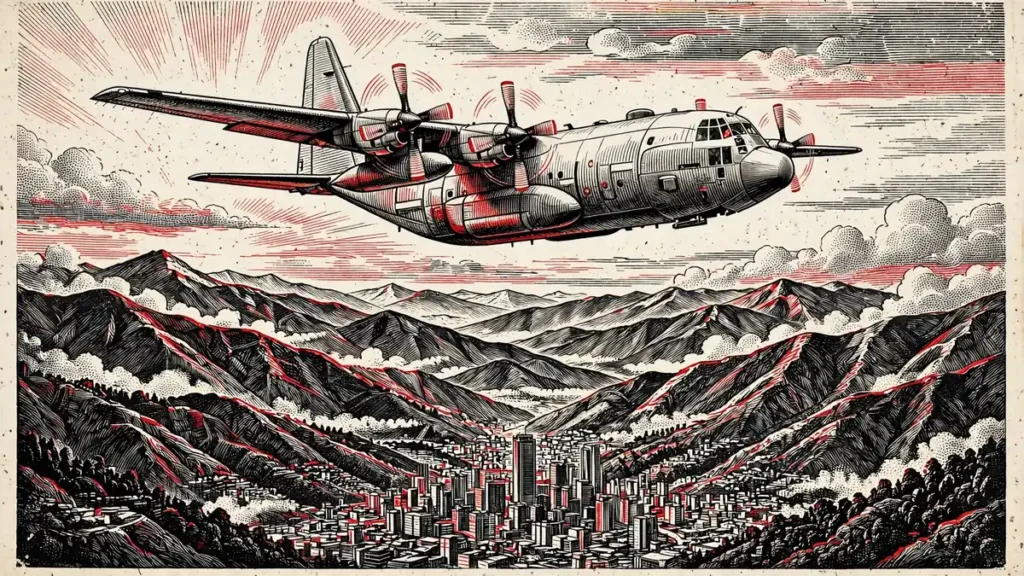
Venezuela’s armed forces — about 123,000 active troops with Russian-built jets, tanks and air defences — are being rebuilt as a United States partner, ten months after American special forces captured President Nicolas Maduro in Caracas.
Key Takeaways
- US Defense Secretary Pete Hegseth signed a military partnership deal in Caracas on November 18, 2026, covering joint training, intelligence sharing and defence equipment — the first such agreement since the January raid that captured Maduro.
- Hegseth called the deal the “Donroe Doctrine”, a revamp of the 19th-century Monroe Doctrine, and described Venezuela as having gone from “our most aggressive regional threat to a compliant security partner”.
- Venezuela fields about 123,000 active personnel (IISS, The Military Balance 2026), around 170 main battle tanks and roughly 25 fighter aircraft — but analysts say readiness is poor and much of the equipment is ageing.
- No text of the deal has been published and the Pentagon has given no details on its scope or timeline, so what it changes in practice is still unconfirmed.
What happened in Caracas on November 18?
US Defense Secretary Pete Hegseth made a surprise visit to Caracas on November 18, 2026, his first trip to Venezuela since US special forces deposed Maduro in a January raid. He was welcomed at the Miraflores presidential palace by interim President Delcy Rodriguez, who has led the government since she was sworn in on January 5, two days after Maduro’s capture.
Standing alongside Rodriguez, Hegseth announced that the two countries had signed what he called “a historic agreement that reestablishes a renewed military partnership”. The deal covers joint training, intelligence sharing, defence equipment and “other capabilities”, according to Hegseth. Footage broadcast on Venezuelan state television showed him signing the agreement earlier in the day with Defence Minister Gustavo Gonzalez Lopez.
Rodriguez said the arrangement would help the two countries confront “common threats” and strengthen training for Venezuela’s armed forces. Hegseth said the partnership would bring “a significant ramp-up in joint action against drug trafficking groups”, framing the deal as part of the Trump administration’s campaign against what it calls designated terrorist organisations in the region.
“Venezuela has gone from our most aggressive regional threat to a compliant security partner on its way to rebuilding its military alongside the United States.” — US Defense Secretary Pete Hegseth, Caracas, November 18, 2026
Hegseth also gave the policy a name. Invoking a revamped Monroe Doctrine — the 19th-century policy asserting US primacy across the Americas — he called it the “Donroe Doctrine”, a play on President Donald Trump’s name. “That is the Donroe Doctrine,” he said. He added that the US oil deal with Venezuela “makes the Strait of Hormuz a nonfactor for the Western Hemisphere”, linking the military partnership to the energy relationship. The Pentagon did not immediately offer further details on the agreement, and neither side has published its text, so the timeline and scope remain unclear.
How strong is Venezuela’s military?
Venezuela’s armed forces are large on paper and far weaker in practice. The IISS Military Balance 2026 counts about 123,000 active personnel, 8,000 reservists and a 220,000-strong paramilitary category that includes the National Guard and the Bolivarian Militia. Other estimates differ — Global Firepower lists 109,000 active troops — and the government’s own claim of millions of militia members is treated by independent analysts as far above the trained, equipped reality.
| Metric | Figure | Source |
|---|---|---|
| Active personnel | 123,000 | IISS, The Military Balance 2026 |
| Reservists | 8,000 | IISS, The Military Balance 2026 |
| Paramilitary (National Guard, militia) | 220,000 | IISS, The Military Balance 2026 |
| Main battle tanks | ~170 (T-72B1, AMX-30V) | IISS, The Military Balance 2026 |
| Fighter aircraft | ~25 (Su-30MK2) | IISS, The Military Balance 2026 |
| Global Firepower ranking | 51st of 145 | Global Firepower 2026 |
Figures are inventory counts, not the number of systems ready to fly or fight. Estimates vary between sources; the IISS figures are used as the primary measure.
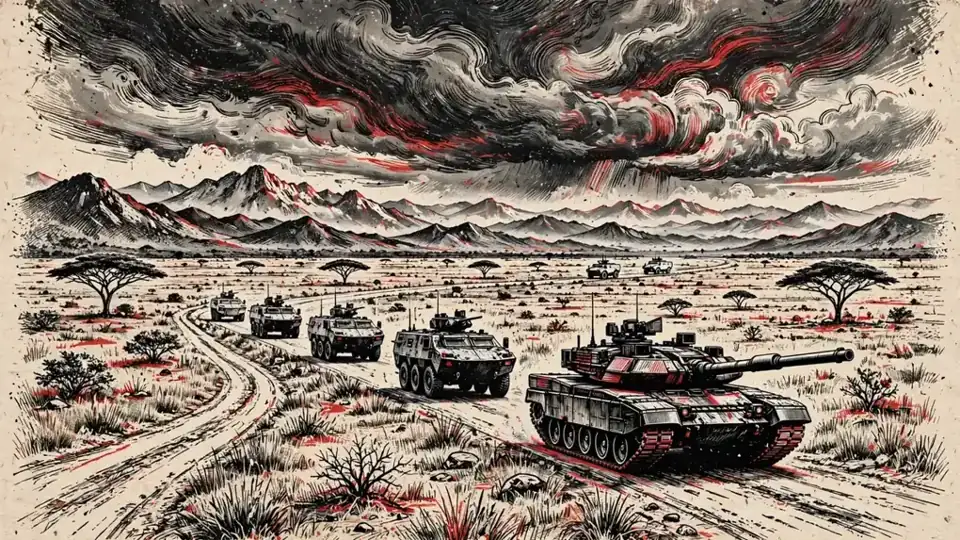
The army’s heavy equipment is Russian and French in origin: T-72B1 main battle tanks bought from Russia and older AMX-30V tanks from France, plus around 600 armoured vehicles and roughly 200 artillery systems and 60 multiple rocket launchers, according to IISS-based assessments. The air force flies Russian Su-30MK2 fighters — about two dozen on the books — and a transport and helicopter fleet that analysts say suffers from grounding, obsolescence and cannibalisation for spare parts. Air defence is built around Russian-supplied systems, reported to include the S-300VM long-range system alongside Buk-M2 and S-125 Pechora-2M batteries, though their operational status after the January strikes is not publicly confirmed.
The navy is the smallest service, with two ageing diesel-electric submarines, a handful of frigates and patrol vessels, and a marine corps. It has no capacity for sustained operations far from Venezuela’s coast. The January raid itself exposed the force’s limits: US aircraft struck air-defence and military infrastructure around Caracas and the Fuerte Tiuna military complex, and Maduro was seized from his compound in the early hours of January 3. He was flown to the USS Iwo Jima and on to New York, where he faces narco-terrorism and cocaine importation charges under a 2020 indictment in the Southern District of New York.
Who are Venezuela’s allies now?
For two decades Venezuela’s military was built on Russian and Chinese supply. Moscow sold the Su-30MK2 fighters, the T-72 tanks and the air-defence systems; Beijing supplied radars, transport aircraft and surveillance equipment. Cuba provided security and intelligence cooperation. That alignment made Venezuela the most heavily Russian-equipped military in South America — and the least interoperable with the United States.
The November 18 deal reverses the direction of travel, at least politically. Venezuela is now formally a US security partner, with American training, intelligence and equipment on offer. What that means in hardware terms is unconfirmed: no equipment list has been announced, and rebuilding a force whose jets, tanks and air defences are Russian-built cannot be done quickly or cheaply.
Oil is the leverage on both sides. Venezuela holds the world’s largest proven oil reserves, about 303 billion barrels according to OPEC, and in August a deal gave the producer North American Blue Energy Partners long-term access to 17 oilfields holding about a fifth of those reserves through a partnership with the US government. That trade has long run through sanctions workarounds — our explainer on how oil sanctions work sets out the price caps, shadow fleets and enforcement behind it. The company says it plans to produce more than 250,000 barrels a day by the end of the year. Hegseth’s argument in Caracas was that Venezuelan oil reduces the Western Hemisphere’s exposure to Middle East supply shocks — the reason he tied the deal to the Strait of Hormuz.
The partnership also sits inside a wider regional pattern. Hegseth flew on to Colombia the same day, where he handed over the first of three promised C-130 Hercules transport aircraft — the subject of our Colombia country profile. Colombia joined the US-led Shield of the Americas initiative in August 2026, and the administration is building a network of security partnerships across the region framed around counter-narcotics. Venezuela’s long-running territorial claim over the Essequibo region of Guyana, which Caracas pressed with a 2023 referendum, remains unresolved and is the one live dispute where Venezuela’s military posture still matters to a neighbour.
What does the deal change — and what stays the same?
What changes first is access. Venezuelan officers will train with US forces, share intelligence and receive American equipment — a reversal of the post-Chavez era, when US-Venezuelan military contact was effectively frozen and Caracas bought almost everything from Moscow and Beijing. Counter-narcotics operations are the stated priority, and Hegseth’s warning to “narco-terrorists” in the region signals that joint operations, not just training, are on the table.
What stays the same, for now, is the force itself. The deal does not replace a single tank or jet, and no timeline for deliveries has been given. The interim government in Caracas is still led by Rodriguez, a Maduro loyalist who condemned the January raid as imperialist aggression before accepting the US-brokered arrangement. The legitimacy of the January operation remains contested under international law, and no election date has been announced for a government chosen by Venezuelan voters rather than installed by succession.
The deal’s limits are also worth stating plainly. No text has been published, the Pentagon has not answered questions about it, and Hegseth’s own department did not provide a schedule for his visit. Until details emerge, the agreement is best read as a political signal — Venezuela is inside the US security orbit — rather than a measurable change in military capability. For readers tracking country profiles and the region, the test will be what happens next: the first joint training, the first equipment delivery, and the first public accounting of what the deal actually contains.
What to watch next in Venezuela
Watch for the Pentagon to release details of the agreement — a text, a fact sheet or a briefing on the first joint activities. Watch for the first visible deliveries: training teams, transport aircraft or air-defence support would show the partnership is moving beyond the signing ceremony. Watch oil output against the 250,000-barrels-a-day target, since the energy deal is the economic engine behind the security one. And watch the regional picture: Colombia’s C-130 handover, the Shield of the Americas initiative, and any movement on the Essequibo dispute with Guyana will show whether the Donroe Doctrine is a slogan or a sustained regional posture. WarBrief will update this profile as verified details emerge.
Frequently asked questions
How big is Venezuela’s military?
About 123,000 active personnel, 8,000 reservists and 220,000 paramilitary forces, according to the IISS Military Balance 2026. It fields around 170 main battle tanks and roughly 25 Su-30MK2 fighter aircraft, but analysts say readiness is poor and much of the equipment is ageing or grounded.
What is the Donroe Doctrine?
It is the name US Defense Secretary Pete Hegseth gave on November 18, 2026, to a revamped Monroe Doctrine — the 19th-century policy asserting US primacy across the Americas. The name is a play on President Donald Trump’s name, and Hegseth used it to describe Venezuela’s shift from regional threat to US security partner.
What did the US-Venezuela military deal agree?
Joint training, intelligence sharing, defence equipment and “other capabilities”, according to Hegseth’s announcement in Caracas on November 18, 2026. No text has been published and the Pentagon has given no further details, so the scope and timeline are still unconfirmed.
Does Venezuela still use Russian weapons?
Yes. Its main combat systems are Russian-built: Su-30MK2 fighters, T-72B1 tanks and air-defence systems reported to include the S-300VM. The new US partnership has not yet replaced any of that equipment.
Who leads Venezuela now?
Delcy Rodriguez, who was sworn in as interim president on January 5, 2026, two days after US special forces captured President Nicolas Maduro in Caracas. Maduro is in US federal custody facing narco-terrorism charges in New York.
Sources
- Reuters via Channel NewsAsia: Hegseth, in Caracas, announces US-Venezuela military partnership agreement
- Associated Press via Military.com: US and Venezuela Sign a Deal to Reestablish Military Ties, Hegseth Says on Visit to Interim Leaders
- Al Jazeera: US Defence Secretary Hegseth reveals military partnership on Venezuela trip
- CNN: Venezuela a ‘compliant security partner,’ Hegseth says as he announces military deal with Caracas
- DefenseMatrixLab (IISS Military Balance 2026): Venezuela military strength 2026