WarBrief Live | November 9, 2026 | Country Profile
Denmark military capabilities in 2026 are expanding faster than almost any other force in NATO, even though the force itself is small: about 16,600 active-duty personnel, an F-35A fleet growing to 43 jets, a 20-ship navy, and a 2026 defence budget of about DKK 105 billion — roughly 3.5% of GDP — built around three missions: NATO’s northern flank, the UK-led Joint Expeditionary Force, and the Arctic.
Key Takeaways
- Defence spending reached $14.9 billion in 2025 (3.3% of GDP, per SIPRI) and is budgeted at DKK 105 billion for 2026.
- The F-35A fleet grows from 27 ordered jets to 43 after 16 more were approved in October 2025.
- On November 5, 2026, Denmark agreed to buy Finland’s BLOCKER naval mines through the five-nation Naval Mines Cooperation.
- Two Arctic agreements (DKK 14.6 billion and DKK 27.4 billion) add patrol vessels, maritime patrol aircraft, drones and a new Joint Arctic Command headquarters in Nuuk.
Overview: a small state with three fronts
Denmark is a founding member of NATO, joining in 1949, and the Kingdom of Denmark spans three very different theatres: Denmark itself on the Baltic approaches, the Faroe Islands in the North Atlantic, and Greenland in the Arctic. A country of just under 6 million people is therefore responsible for the defence of a vast maritime and Arctic area, and its armed forces — the Royal Danish Army, the Royal Danish Navy and the Royal Danish Air Force — are organised around that geography.
The build-up is governed by the Danish Defence Agreement 2024–2033, a ten-year framework worth about DKK 190 billion, topped up in February 2025 by a DKK 50 billion Acceleration Fund. The scale of the change is visible in the spending figures: Denmark spent 1.65% of GDP on defence in 2023 and reached 3.3% — $14.9 billion — in 2025, according to SIPRI, one of the fastest increases in NATO. The 2026 budget is set at DKK 105 billion, about €14 billion, or roughly 3.5% of GDP.
Military capabilities: what Denmark fields
The Danish Army is built around its 1st Brigade, being developed into a combat-ready heavy brigade by 2028, with 44 Leopard 2A7 main battle tanks as its armoured core. Elements of the brigade serve in Latvia as part of NATO’s enhanced forward presence. The army is also growing its people: from 2026, conscription runs for 11 months instead of four, women are included on the same terms as men, and the annual intake is set to rise from about 5,000 to 7,500 by 2033. The first full intake under the new system — about 1,600 recruits — reported for duty in August 2026, with some conscripts training in Greenland for the first time.
The Royal Danish Navy operates about 20 commissioned ships, including three Iver Huitfeldt-class air-defence frigates and Arctic patrol vessels of the Thetis and Knud Rasmussen classes that work the waters around Greenland and the Faroe Islands. The Royal Danish Air Force is replacing its F-16s — many donated to Ukraine — with F-35A Lightning IIs: 27 ordered, 16 more approved in October 2025, taking the planned fleet to 43, with national quick-reaction alert duties assumed in 2025. Denmark has also moved to close its long-standing ground-based air-defence gap, with new systems ordered in 2025, and a maritime patrol aircraft capability is funded under the Arctic agreements.
| Metric | Figure | Source |
|---|---|---|
| Defence spending, 2025 | $14.9 billion (3.3% of GDP) | SIPRI |
| Defence budget, 2026 | DKK 105 billion (~€14 billion; ~3.5% of GDP) | Danish Defence |
| Active military personnel | About 16,600 (2024) | Danish Defence |
| Main battle tanks | 44 Leopard 2A7 | IISS Military Balance 2026 |
| F-35A fleet | 27 ordered; 16 more approved October 2025 (43 total) | Danish Ministry of Defence |
| Support for Ukraine (to August 2026) | About €12.2 billion total; about €10.8 billion military | Kiel Institute |
All figures above are confirmed by the cited sources. Denmark’s reserve structure adds about 12,000 reservists and a Home Guard of roughly 51,000 volunteers.
Alliances and posture: NATO’s northern flank
Denmark’s posture is alliance-first. It is a founding NATO member, a member of the UK-led Joint Expeditionary Force (JEF) — the ten-nation grouping of Britain, Denmark, Finland, Iceland, Norway, Sweden, Estonia, Latvia, Lithuania and the Netherlands, formed in 2014 — and a close Nordic defence partner. On November 10, 2026, the JEF members are expected to formalise an expanded anti-submarine effort against suspected Russian submarine activity around undersea cables and pipelines in the North Atlantic, Arctic and Baltic Sea, aboard the British aircraft carrier HMS Prince of Wales, according to the Financial Times. The suspected cable-sabotage plot behind the move is reported as a suspicion, not a confirmed attack, and the arrangement expands existing cooperation rather than creating a new alliance.
Denmark’s most visible alliance contribution is its support for Ukraine: about €12.2 billion in total support by August 2026, including about €10.8 billion in military aid, according to the Kiel Institute’s tracker — the second-highest per person of any donor, at about €1,878 per Dane, behind only Norway. In the Arctic, Denmark hosts the US-operated Pituffik Space Base in Greenland and runs Joint Arctic Command from Nuuk. For the wider region, see the United Kingdom military profile — the JEF’s lead nation — and the Lithuania military profile, alongside the full Country Profiles hub.
Current developments: mines, the Arctic and the draft
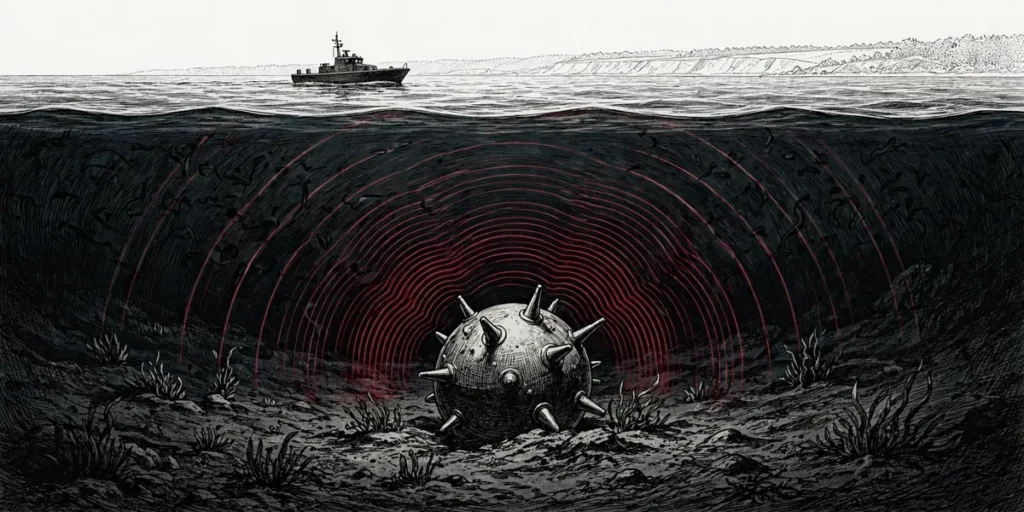
The newest capability decision came on November 5, 2026, when Denmark agreed to buy Finland’s BLOCKER naval mines through the Naval Mines Cooperation, a procurement scheme launched in 2024 and led by Finland. Under it, Finland’s military signed a framework contract with manufacturer Forcit Defence in June 2026 worth hundreds of millions of euros on behalf of the five participating countries — Finland, Denmark, Germany, Lithuania and Norway — and Lithuania decided on its own contract a day before Denmark. The BLOCKER is a smart influence mine with an explosive effect equivalent to about a tonne of TNT, intended mainly for deployment from new mine-laying vessels as the transition to 2029 takes place: a deliberate rebuilding of Baltic sea-denial capability.
The Arctic remains the other axis of change. The first Arctic agreement of January 2025 committed DKK 14.6 billion to three new Arctic vessels, two long-range drones and improved satellite capacity. The second agreement of October 10, 2025, worth DKK 27.4 billion, adds two more Arctic vessels, a maritime patrol aircraft capability, additional drones, an air surveillance radar in East Greenland, a North Atlantic undersea cable and a new Joint Arctic Command headquarters in Nuuk. Together they answer two pressures at once: Russian activity in the High North, and the renewed debate over Greenland’s security. Watch the November 10 JEF formalisation for Denmark’s specific anti-submarine commitments, and the delivery timeline for the BLOCKER mines and the new mine-laying vessels.
Frequently asked questions
How big is Denmark’s military?
Denmark has about 16,600 active-duty military personnel (2024 figures), backed by about 12,000 reservists and a Home Guard of roughly 51,000 volunteers. Conscription is expanding the intake from about 5,000 to 7,500 recruits a year by 2033.
How many F-35 fighter jets does Denmark have?
Denmark ordered 27 F-35A Lightning IIs and approved 16 more in October 2025, taking the planned fleet to 43. Deliveries are ongoing, and Danish F-35s took over national quick-reaction alert duties in 2025.
Why is Denmark buying naval mines?
Denmark agreed on November 5, 2026, to buy Finland’s BLOCKER mines through the five-nation Naval Mines Cooperation. The mines are a sea-denial weapon for the Baltic approaches, intended for deployment from new mine-laying vessels, rebuilding a capability Western navies largely abandoned after the Cold War.
What is Denmark’s role in the Arctic?
Denmark is responsible for the defence of Greenland and the Faroe Islands, runs Joint Arctic Command from Nuuk, and hosts the US-operated Pituffik Space Base in Greenland. Two Arctic agreements in 2025 committed DKK 14.6 billion and DKK 27.4 billion to new Arctic vessels, maritime patrol aircraft, drones, radar and a new command headquarters.
Sources
- Defense News: Denmark, Lithuania latest Baltic navies to buy ‘Blocker’ mines through Finnish scheme
- Danish Ministry of Defence: The Second Agreement on the Arctic and North Atlantic (DKK 27.4 billion)
- MilitarySpend / SIPRI: Denmark Military Spending 2025 — $14.9B, 3.3% of GDP
- Kiel Institute Ukraine Support Tracker (via MinFin): Denmark — €12.17 billion total, €10.8 billion military
- Reuters (via The News): Denmark expands military service to include women
- Financial Times (via Mazech): UK to lead Norway, Sweden and seven NATO allies against Russian submarines
- Danish Defence: force structure, personnel and 2026 budget