WarBrief Live | November 6, 2026 | Country Profile
Montenegro, a country of about 620,000 people on the Adriatic coast, is the closest candidate to joining the European Union and the smallest member of NATO. The European Commission said on November 4 that Montenegro could complete its accession talks by the end of the year, with membership possible in 2028. Its military is tiny — about 2,350 active personnel — but its ports and 293 kilometers of coastline give NATO control of the entire Adriatic shore.
Key Takeaways
- Montenegro has provisionally closed 21 of 33 EU negotiating chapters; talks could finish by the end of 2026, with an accession treaty possibly signed in June 2027 and membership in 2028.
- Its armed forces number about 2,350 active personnel, with defence spending of roughly 161 million euros in 2025 — about 2 percent of GDP — and a plan to reach 5 percent by 2035.
- Montenegro has no fighter jets and no main battle tanks; Italian and Greek jets patrol its airspace, while a modernisation drive adds patrol vessels, helicopters and air defences.
Overview: a small state on a strategic shore
Montenegro regained independence in 2006 after a referendum ended its union with Serbia. It has been an EU candidate since 2012 and joined NATO on June 5, 2017, as the alliance’s 29th member. Its 293 kilometers of Adriatic coastline, with the ports of Bar and Kotor, are its main strategic asset: with Albania, Croatia and Italy also in NATO, the alliance controls the whole Adriatic shore. The country’s politics have long been split between a pro-Western course and historic ties to Serbia and Russia.
Military capabilities: small, professional, and modernizing
The Armed Forces of Montenegro (Vojska Crne Gore) are a small professional force with three branches — a ground army, a navy and an air force — totalling about 2,350 active personnel, supported by roughly 1,000 reservists. The force fields no main battle tanks and no fighter jets. Its air arm operates 11 helicopters, and Italian and Greek jets patrol Montenegrin airspace under NATO air policing.
Defence spending reached about 161 million euros in 2025, roughly 2 percent of GDP. At the June 2025 Hague summit, allies agreed to raise spending to 5 percent of GDP by 2035 — 3.5 percent on defence and 1.5 percent on related security infrastructure. Defence Minister Dragan Krapovic has said Montenegro would need about 400 million euros a year by 2035.
| Metric | Figure | Source |
|---|---|---|
| Active personnel | 2,350 | Global Firepower 2026 |
| Defence budget, 2025 | About 161 million euros | NATO / Defence Ministry |
| Defence spending | About 2% of GDP | NATO, 2025 |
| Helicopters | 11 | Global Firepower 2026 |
| EU chapters closed | 21 of 33 | European Commission, Nov 4, 2026 |
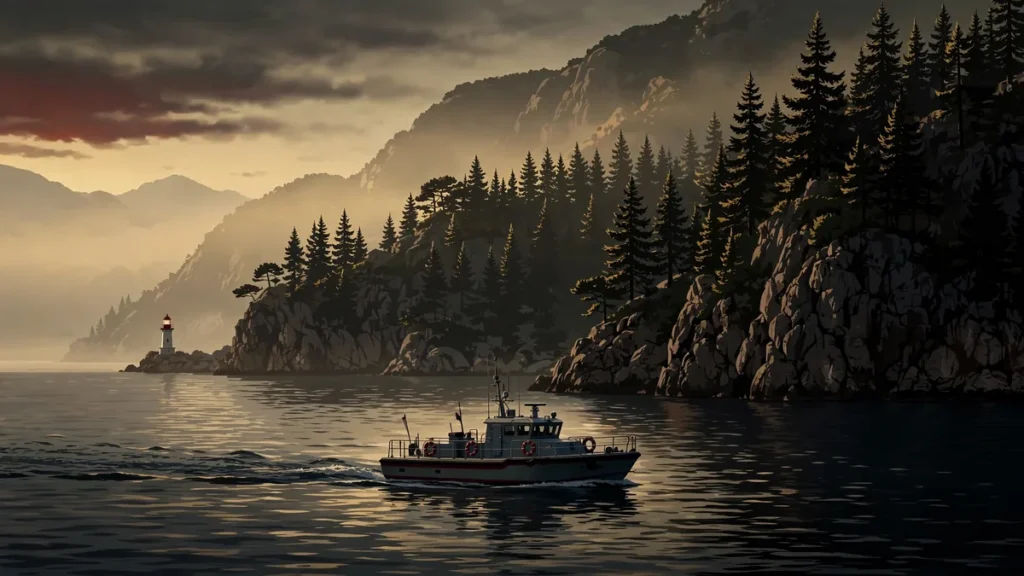
A modernisation drive is under way: the 2026 budget proposal would borrow up to 250 million euros for four helicopters, air defence systems, vehicles and CBRN equipment. Two OPV-60M patrol vessels, Petar I Njegos and Petar II Njegos, are being built by French shipyard Kership, with deliveries due in 2026. In October 2026 the army took delivery of its first CZ BREN 3 rifles.
Alliances and posture: NATO’s Adriatic anchor
NATO membership is the centre of Montenegro’s security policy. It joined on June 5, 2017, after a parliamentary vote Moscow opposed. Montenegrin troops serve in NATO’s KFOR mission in Kosovo and in the alliance’s forward presence in Latvia and Bulgaria, and have also served in Iraq. The Bay of Kotor was a naval base under Austria-Hungary and Yugoslavia; today Bar and Kotor give NATO a deep-water foothold on the eastern Adriatic — German news agency dpa noted at accession that the ports mattered more to the alliance than the army. Compare with the United Kingdom and France profiles, and browse all profiles on the Country Profiles hub.
Russia has pushed back throughout. Montenegro’s chief special prosecutor alleged that Russia’s security services were behind an October 2016 plot to kill then prime minister Milo Djukanovic and stop accession; Russia denies involvement. In 2017, FireEye attributed cyberattacks on Montenegrin state institutions to the Russian group APT28, also known as Fancy Bear. Podgorica has joined EU sanctions against Russia — a factor in its frontrunner status for EU membership.
Current developments: the EU finishing line
The November 4 enlargement package put Montenegro at the front of the queue: it has provisionally closed 21 of 33 chapters, has met all closing benchmarks, and could finish the remaining talks before the end of 2026. Enlargement Commissioner Marta Kos said Montenegro is “on track to become the 28th member of the European Union in 2028,” with the treaty likely signed in summer 2027.
An intergovernmental conference on November 6 is expected to close two more chapters — free movement of goods, and food safety and phytosanitary policy — taking the total to 23, with the rest scheduled for November and December. Membership is not guaranteed: the treaty must be ratified by all 27 member states, and reforms must hold. On defence, 2026 is a delivery year: the two patrol vessels are due, helicopter and air defence purchases move through parliament, and the new Czech rifles are rolling out. For US, UK and EU readers, the signal is that NATO’s smallest Adriatic ally is spending more while Russia’s influence recedes.
Frequently asked questions
Is Montenegro a member of NATO?
Yes. Montenegro joined NATO on June 5, 2017, as the alliance’s 29th member. It has no fighter jets, so Italian and Greek aircraft patrol its airspace.
When will Montenegro join the EU?
The government aims for 2028. The Commission said on November 4 that Montenegro has provisionally closed 21 of 33 chapters and could finish talks by the end of 2026, with a treaty possibly signed in summer 2027. All 27 member states must still ratify it.
How large is Montenegro’s military?
About 2,350 active personnel plus roughly 1,000 reservists, across a ground army, a navy and an air force. It has no main battle tanks and no fighter jets; its air force operates 11 helicopters.
Why does Montenegro matter to NATO?
Its 293 kilometers of coastline and the ports of Bar and Kotor give NATO control of the entire Adriatic shore.
Sources
- EU Today: EU Enlargement 2026
- Vijesti: Montenegro on track for EU membership in 2028
- NATO: Defence Expenditure of NATO Countries (2014–2025)
- Vijesti: Montenegro defence spending to 400 million euros by 2035
- Naval Today: New patrol vessels for Montenegro
- The Firearm Blog: CZ BREN 3 enters service in Montenegro
- NATO: Air patrols over Montenegro
- Global Firepower: 2026 Montenegro Military Strength