WarBrief Live | November 5, 2026 | Sanctions
On November 4, 2026, the US Treasury sanctioned a Chandigarh-based network accused of selling fake ship flags and false maritime certificates to Iran’s shadow fleet, and a Turkish firm accused of servicing sanctioned Iranian airlines. It is the latest strike in Operation Economic Outcast, the campaign to cut off the Iranian regime’s revenue.
Key Takeaways
- Thirteen people and companies in the Sharma–Shahid network were designated for allegedly running fake flag registries for Iran’s shadow fleet since 2014.
- The network allegedly impersonated the flag authorities of Guyana, Eswatini, Aruba and others.
- Turkiye-based Fugo Ground Services Inc was designated for servicing sanctioned Iranian airlines.
- OFAC issued a new alert warning shippers, flag states and ports to verify vessel registrations.
What happened on November 4?
The Treasury announced the designations under Executive Order 13902, which targets Iran’s petroleum, petrochemical and aviation sectors. The action named Suniel Kumar Sharma and his wife Jaspreet Preeti Shahid, two Indian nationals identified as nominal directors of their businesses, Ashwani Kumar Dhiman and Ishwinder Singh, and nine companies linked to the couple. Their US property is blocked and must be reported to OFAC. Secretary Scott Bessent said: “Under Operation Economic Outcast, you are either with us or against us.”
Who are Suniel Kumar Sharma and Jaspreet Preeti Shahid?
According to Treasury, the couple have operated from Chandigarh, India, for more than a decade, defrauding maritime regulators to set up false flagging authorities and classification societies. Their operations began as early as 2014, when they sought to impersonate the flagging authority of Dominica. In 2023, Sharma established the Singapore-based Eswatini Maritime Affairs and International Ship Registry, which Treasury says still flags vessels carrying Iranian petroleum even though Eswatini’s authorities have publicly disavowed it, including the sanctioned vessel PING SHUN (IMO 9231901).
Sharma is managing director of Oceaniek Technologies India, which Treasury says he used to create false registries purporting to belong to Aruba, Nicaragua and Sint Maarten, supplying false flags to sanctioned vessels including LATTAFA (IMO 9245794), BINARY STAR (IMO 9380570) and VERA (IMO 9304655). Other designated companies include Aryavart Ship Management, Precept Trends, Polynesia Maritime and Alexarya Finserv.
How does a fake flag actually work?
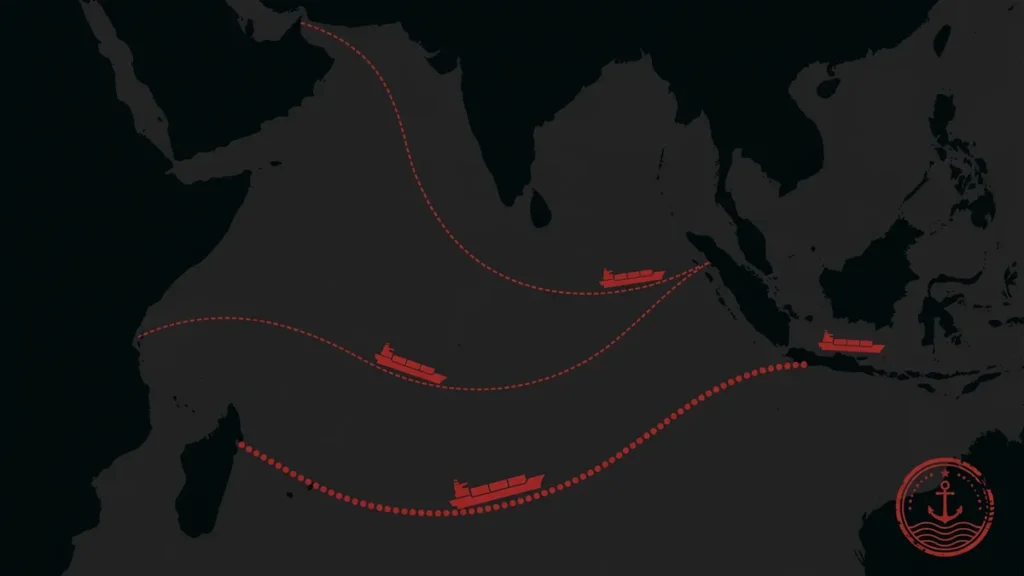
Every merchant vessel must fly the flag of a state that registered it. That flag state handles safety inspections, crew certification and environmental compliance, and the vessel carries protection and indemnity insurance tied to its registration. A fake flag breaks that chain: the ship carries papers that look official but were never issued by the state named on them. Treasury says the Sharma network bought web domains and built websites claiming to offer flagging, seafarer training and vessel classification on behalf of countries that never authorised them. Falsely flagged vessels carry no valid insurance, leaving coastal states exposed to billions in uninsured damage.
What happened to the MAJESTIC X?
On April 22, 2026, the US Department of War seized the tanker MAJESTIC X, formerly the PHONIX (IMO 9198317), while it was carrying Iranian oil under a false Guyanese flag. Treasury cites the seizure as evidence that the fake registries were not a paperwork exercise: the ships they served were moving real Iranian cargo. See the November 1 shipping designations for the earlier action in this campaign.
What does the Fugo designation mean for Iran’s airlines?
OFAC designated Turkiye-based Fugo Ground Services Inc for operating in Iran’s aviation sector. Treasury says Fugo provides ground handling and other services to several US-designated Iranian airlines that continue to fly to Turkiye, including Iran Air Tour and Taban Airlines, Treasury says Iran uses such airlines to move fighters, weapons and cash to its proxies. See also OFAC’s October Iran package.
What is Operation Economic Outcast, and what does this action change?
Operation Economic Outcast was announced by Secretary Bessent on August 24, 2026, and has been described by President Trump as “Economic D-Day”. Treasury says the campaign is severing the remaining economic lifelines that sustain the Iranian regime. For the maritime industry, the practical consequence is a higher screening burden: OFAC’s new alert, “Iranian Shadow Fleet Reliance on False Flags for Sanctions Evasion”, urges flag states, port authorities and the maritime industry to verify vessel registrations rather than taking registry documents at face value. For US, UK and EU readers the impact is limited — this targets facilitators, not oil supply — but it is structural: Treasury is attacking the paperwork layer that lets the shadow fleet operate. The full picture of the sanctions regime is set out on WarBrief’s sanctions hub.
This entry is educational content about a sanctions designation. It is not legal advice; businesses with exposure to the designated persons or to Iranian shipping should seek professional advice.
Frequently asked questions
What is Iran’s shadow fleet?
The shadow fleet is a network of ageing tankers, often owned through front companies and flagged in loosely regulated jurisdictions, that Iran uses to move oil while evading sanctions. The November 4 designations target the registries that kept those ships looking legitimate.
What is a fake flag?
A fake flag is a vessel registration issued by a person or company falsely claiming to act for a country. The ship flies that country’s flag and carries its certificates, but the country never authorised the registration, so the vessel escapes a real flag state’s safety and insurance oversight.
Who was designated on November 4, 2026?
Thirteen people and companies in the network of Suniel Kumar Sharma and Jaspreet Preeti Shahid of Chandigarh, India, plus Turkiye-based Fugo Ground Services Inc, all under Executive Order 13902.
Does this sanction the Indian government?
No. The designations target named individuals and companies accused of running the fraud network. Treasury’s action does not impose sanctions on India or its government.
Sources
- US Department of the Treasury: Operation Economic Outcast Targets Global Maritime Fraud Network Supporting Iranian Regime (November 4, 2026)
- The Hindu: U.S. slaps sanctions on Indian, Turkish firms and people for aiding Iran
- Turkiye Today: US targets Istanbul firm serving blacklisted Iranian airlines
- Times Now: US sanctions Indian couple and their companies for allegedly helping Iran’s oil fleet
- Financial Express: Maritime fraud — US sanctions Indian companies linked to massive Iranian oil operation