WarBrief Live | November 4, 2026 | Sanctions Tracker
On October 1, 2026, the United States widened its Iran sanctions net in two directions at once: it brought Iran’s automotive and rail sectors under sanctions authority, and it targeted the Russia-linked A7 Network, which the US Treasury says Iran uses to move money around sanctions. The comment period on a separate proposed banking restriction aimed at the network’s intermediaries closed on November 4, 2026.
Key Takeaways
- OFAC’s October 1 determination under Executive Order 13902 makes anyone operating in Iran’s automotive or rail sectors sanctionable.
- The same day, OFAC designated 28 entities and two individuals, including Iran’s two dominant carmakers and its state railway.
- OFAC separately designated the A7 Network as a significant transnational criminal organization under Executive Order 13581.
- FinCEN’s proposed rule against the network’s “Sub-Agents” is still only a proposal, not a final rule in force.
What did OFAC designate on October 1?
The core move was a sector determination. Under section 1(a)(i) of Executive Order 13902, the US Treasury’s Office of Foreign Assets Control (OFAC) identified the automotive and rail sectors of the Iranian economy as sectors subject to sanctions. Anyone determined to operate in either sector may now be sanctioned, and anyone who knowingly engages in a significant transaction for the sale, supply or transfer to or from Iran of significant goods or services used in connection with the covered sectors risks exposure to blocking sanctions, as described in OFAC’s amended FAQ 831. OFAC has not yet published working definitions for the two new sectors.
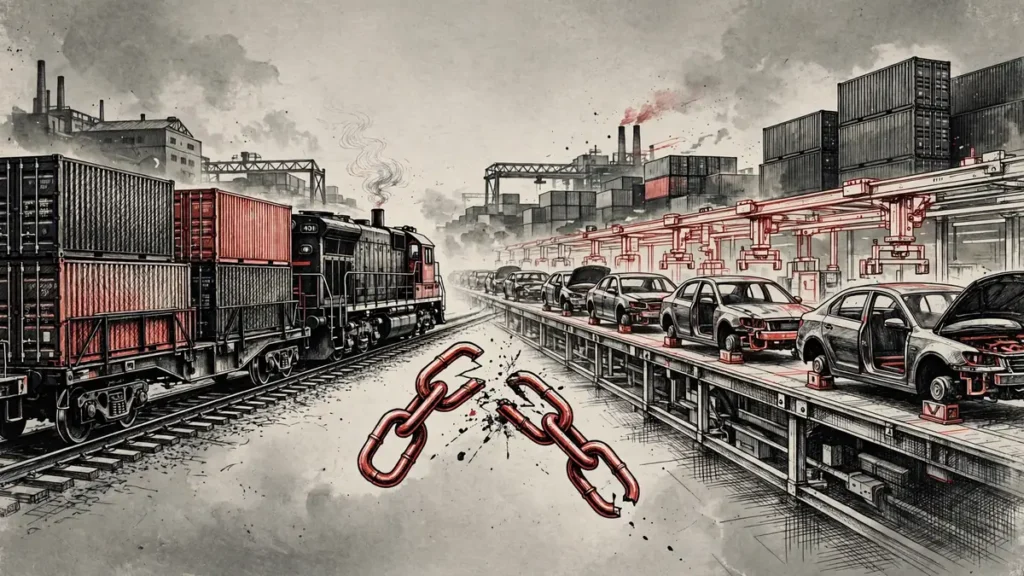
The designated automotive names include Iran Khodro Company, SAIPA Iranian Automobile Manufacturing Company, Iran Khodro Diesel Company, Pars Khodro Company and Zamyad Company, plus Niroo Motor Shiraz and Niroo Motor Damavand. Together, Iran Khodro and SAIPA account for more than 90% of Iran’s domestic auto market, according to Morgan Lewis. On rail, OFAC designated the state-owned Islamic Republic of Iran Railway Company, Raja Passenger Trains Company and the Railway Transportation Company, also known as Sherkat-E Rah Ahan-E Khamle-O-Naghle. Steptoe reports that foreign suppliers were also designated, with companies based in Hong Kong, China, the UAE, Indonesia, Türkiye and Germany among the 30 parties sanctioned that day under Executive Orders 13902 and 13871.
How does the A7 Network allegedly work?
Treasury describes the A7 Network as a “shadow banking network with ties to Russia” used by Iran, including the Islamic Revolutionary Guard Corps, to evade sanctions. That designation targets the network itself, rather than a sector of the Iranian economy.
According to FinCEN, the network operates through hundreds of companies it calls “Sub-Agents”: companies operating outside the United States that are controlled by A7. A customer settles an obligation inside A7’s internal system, while an overseas Sub-Agent appears on invoices or payment instructions as the contracting or paying party, so the payment can be presented as ordinary commercial activity. FinCEN assesses that these Sub-Agents held accounts at roughly 435 financial institutions in at least 83 countries as of June 2026, and processed more than $17 billion in dollar-denominated transactions between January 2025 and June 2026, including nearly $140 million from entities involved in Iranian sanctions evasion. Those figures are FinCEN’s assessments, not independently adjudicated findings.
What is FinCEN proposing, and what is not yet law?
On October 1, FinCEN issued a finding and notice of proposed rulemaking under section 9714(a) of the Combating Russian Money Laundering Act. It found transactions involving A7 Sub-Agents to be a class of transactions of primary money laundering concern in connection with Russian illicit finance, and proposed prohibiting covered US financial institutions from sending or receiving funds, including convertible virtual currency, involving a Sub-Agent or an account or address administered on a Sub-Agent’s behalf. The proposal, published in the Federal Register on October 5, 2026, names six UAE-based Sub-Agents, the largest being Power Sphere LLC-FZ, which TRM Labs reports moved $61 million. FinCEN would share a wider list of known Sub-Agents through its secure portal, with a process to petition for removal.
That restriction remains a proposal: the comment period closed on November 4, 2026, and no final rule has been issued. The OFAC designations, by contrast, are already in force. Readers should not treat the proposed transfer ban as an operative prohibition until FinCEN finalizes it.
| Figure | Detail | Source |
|---|---|---|
| 28 entities + 2 individuals | Designated October 1, 2026, under Iran-related authorities | Baker McKenzie |
| More than 90% | Share of Iran’s domestic auto market held by Iran Khodro and SAIPA combined | Morgan Lewis |
| More than $17 billion | Dollar-denominated transactions processed by A7 Sub-Agents, January 2025 to June 2026 (FinCEN assessment) | FinCEN via TRM Labs |
| November 4, 2026 | Comment deadline on FinCEN’s proposed A7 Sub-Agent rule | Baker McKenzie; FinCEN notice |
What does this mean for US, UK and EU readers?
For most readers the effect is indirect but real. Car and rail supply chains that touch the designated Iranian companies, their subsidiaries or their foreign suppliers now carry sanctions-screening risk, and banks must be able to spot Sub-Agent transactions disguised as ordinary trade. The WarBrief Sanctions Tracker follows how these designations are enforced. The package is part of a wider pattern: it follows the November 1 Iran shipping designations in a different sector, and extends the Operation Economic Outcast campaign that began on August 24, 2026, with aviation, digital asset, gold, shipping and technology sector determinations. For companies, the practical step is re-running counterparties, cargo, routes and transactions against the current Specially Designated Nationals list. This entry is educational only and is not legal advice.
What to watch next in the A7 sanctions file
Three things matter next: whether FinCEN finalizes the Sub-Agent rule after the November 4 comment deadline, and in what form; whether OFAC publishes working definitions for the automotive and rail sectors in FAQ 831; and whether enforcement follows designation, through further supplier designations or banks publicly cutting off Sub-Agent-linked flows.
Frequently asked questions
What is the A7 Network?
The A7 Network is a Russia-linked payments network that the US Treasury describes as a shadow banking network used by Iran, including the Islamic Revolutionary Guard Corps, to evade sanctions. OFAC designated it as a significant transnational criminal organization on October 1, 2026.
Is FinCEN’s ban on A7 Sub-Agent transfers already in force?
No. FinCEN’s measure is a proposed rule, published October 5, 2026, with comments due November 4, 2026. It would only prohibit covered US financial institutions from handling Sub-Agent transmittals if and when it is finalized.
How is this different from the November 1 Iran shipping sanctions?
The November 1 action targeted shipping entities and vessels, including the Karnakis and Roxette designations. The October 1 package targets different sectors, automotive and rail, plus the A7 payments network that allegedly moves money for sanctioned actors.
Sources
- Baker McKenzie: OFAC Adds Iran’s Automotive and Rail Sectors Under EO 13902, Amends FAQ 831, and Designates the A7 Network as a Transnational Criminal Organization
- Morgan Lewis: OFAC Further Intensifies Iran Sanctions Under Operation Economic Outcast
- Steptoe: Weekly Sanctions Update, October 5, 2026
- TRM Labs: FinCEN Moves to Cut the A7 Network’s Sub-Agents Off From the US Financial System