WarBrief Live | October 25, 2026 | Conflict Zone
Former Congolese President Joseph Kabila has taken command of the rebellion fighting the government in eastern Democratic Republic of Congo. On October 12, 2026, in Goma, he launched the Front pour la Refondation de la Nation (FRN), a politico-military coalition replacing the AFC/M23 alliance, with senior M23 figures as his deputies. The move ends years of Kinshasa accusations, denied by Kabila, that he backed the rebellion.
Overview
Eastern Congo has been at war for three decades, driven by territory, minerals, identity politics and the aftermath of the 1994 genocide in neighbouring Rwanda. The current phase began when the March 23 Movement (M23) retook arms in late 2021, accusing Kinshasa of failing to honour reintegration commitments. After a lightning offensive in early 2025, M23 and its political wing, the Congo River Alliance (AFC), seized Goma and Bukavu, the Kivu capitals. The UN and Western governments accuse Rwanda of backing M23; Rwanda denies it.
Kabila, 55, ruled Congo from 2001 to 2019. His 2025 return to Goma and appointment of former allies inside AFC/M23 deepened perceptions of an alliance he denied. The FRN launch removes that ambiguity.
Key actors
- Joseph Kabila and the FRN: Head of the new Front pour la Refondation de la Nation, launched on October 12, 2026, in Goma. Adviser Claude Ibalanky said it aims to “put an end to tyranny by any means necessary, including the use of force.”
- Corneille Nangaa, Bertrand Bisimwa and Sultani Makenga: Nangaa, former electoral commission chief and AFC founder, is an FRN deputy, along with senior M23 leader Bisimwa and M23 military commander Makenga. Freddy Kaniki is secretary-general.
- The government of Felix Tshisekedi: Kinshasa has long accused Kabila of supporting AFC/M23. Spokesman Patrick Muyaya said Kabila “has decided to formalise his widespread attack against the Republic.”
- Rwanda and the mediators: Rwanda, accused by the UN and Western governments of backing M23, denies it and is a party to the Washington Accords. Qatar mediates Doha; the US brokered Washington; an African Union panel facilitates on the ground.
Recent developments
- September 30, 2025: Kinshasa’s High Military Court sentenced Kabila to death in absentia for treason, war crimes and crimes against humanity over alleged AFC/M23 support. Kabila denied the charges and called the case politically motivated.
- April 2026: Washington sanctioned Kabila, alleging he funded rebel groups.
- July-December 2025: Kinshasa and M23 signed a Doha declaration of principles in July 2025 committing to a permanent ceasefire, with a framework in November. In December 2025, Congo and Rwanda formalised the Washington Accords. Fighting continued regardless.
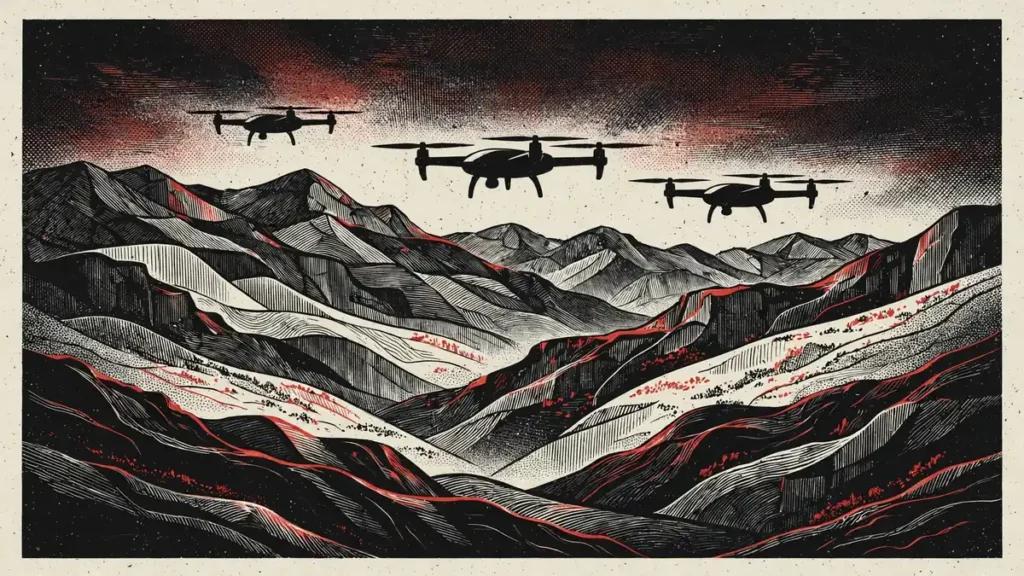
- October 2, 2026: Janes said M23 had introduced a fourth previously unseen drone type since January 2026, a large quadcopter capable of dropping mortar bombs reportedly downed near Minembwe on September 28. Janes recorded 13 drone attacks between July and September, half of all M23 drone attacks logged since January; drones were about 10 percent of recorded attacks that quarter, up from about 5 percent in early 2026.
- October 7, 2026: An African Union panel of former presidents Kenyatta (Kenya), Sahle-Work Zewde (Ethiopia) and Masisi (Botswana) met AFC/M23 leaders in Goma and urged ceasefire adherence and good-faith Doha talks.
- October 9, 2026: Kabila accused the Tshisekedi government of corruption, poor governance and military setbacks, and criticised its US minerals deal.
- October 12, 2026: Kabila launched the FRN at his residence in Goma, held by M23 since January 2025. Reuters reported the group replaces the AFC/M23 alliance; other reporting differed on whether M23 was dissolved or folded in, so WarBrief records the leadership change as confirmed and M23’s legal status as reported differently. The same day, SOS Medias Burundi reported government-coalition positions in the Bijombo highlands, South Kivu, were abandoned after drone attacks attributed to AFC/M23, noting the information had not been independently verified.
- October 13, 2026: At the UN Security Council, envoy Huang Xia said Doha and Washington progress was encouraging but a genuine ceasefire remained elusive and the eastern situation had worsened, with armed drones worsening civilian suffering.
Current status
The war is now led, on the rebel side, by a former president sentenced to death in absentia and sanctioned by Washington for alleged rebel funding. That changes the conflict’s political character even if it does not immediately change the front lines: mediators must decide whether the FRN inherits the AFC/M23 signature in Doha or requires new terms. Reporting differed on that question, and Kinshasa had not stated a position on the Doha talks’ future.
See our earlier DR Congo M23 resurgence profile and the Conflict Zones hub.
What to watch
- Whether mediators treat the FRN as AFC/M23’s continuation in Doha, or as a new party.
- Kinshasa’s formal response, and whether it hardens against dialogue that includes Kabila.
- Whether drone use in the Kivus keeps rising, and whether Bijombo becomes a sustained South Kivu front.
- Washington Accords implementation, including FDLR neutralisation and the lifting of Rwanda’s defensive measures.
Sources
- Reuters via SRN News: Congo’s former president Kabila forms new group to replace M23 insurgency
- Al Jazeera: Ex-DRC President Kabila’s alliance with M23 rebels: Why it matters
- Xinhua: DR Congo’s ex-president Kabila heads new political-military alliance involving M23
- Defense and Tech: M23 Deploys Fourth New Drone Type in DR Congo, Janes Finds
- Al Jazeera: UN official says ‘window of opportunity’ for peace in DR Congo
- Mwenendo News: Kabila Takes Charge of M23 Alliance: Kinshasa Says He Is Formalising an Attack on the State