
WarBrief Live | October 12, 2026 | Cyber Warfare
On October 7, 2026, one of Japan’s major cloud providers suffered an attack that cybersecurity teams had long warned about but rarely seen at this scale: ransomware hit the IDCF Cloud ransomware target — the East Japan Region 1 cluster of IDC Frontier, a SoftBank subsidiary — and knocked roughly 495 companies and local governments offline in a single stroke. Some customer data may never come back.
Key Takeaways
- IDCF Cloud, operated by SoftBank unit IDC Frontier, confirmed a third-party ransomware attack beginning October 7, 2026, at about 3:40 a.m. Japan time in East Japan Region 1.
- The provider says 495 contracting companies and local governments are affected; four zones — tesla, henry, pascal and joule — are stopped and cannot restart.
- IDC Frontier says data in the hit zones will be difficult to recover, and customers can restore it only from their own backups — a lesson in why provider-side snapshots are not a backup strategy.
- JR East, View Card and JR Kyushu disclosed that millions of email addresses may have been exposed through related systems; no ransomware group has been named and no data theft has been confirmed.
What happened in the IDCF Cloud ransomware attack?
IDC Frontier’s own incident notices, summarised by Japanese media including NHK World, describe a sequence that began in the small hours of October 7, 2026. At about 3:40 a.m. Japan Standard Time, unauthorised access was detected in the company’s IDCF Cloud East Japan Region 1 infrastructure. Later the same day, the company confirmed the cause: a ransomware attack by a third party.
The response was immediate and drastic. IDC Frontier isolated East Japan Region 1 from the network, shut down the affected systems, and formed an emergency response headquarters with parent company SoftBank. To prevent the damage from spreading, it also suspended customer access to management consoles in all of its regions — even those where no breach had been detected — while it checked their security.
On October 8, the company issued its third report with the detail that chilled customers: four zones in East Japan Region 1 — named tesla, henry, pascal and joule — were stopped and could not be restarted. Customer data in those zones, the company said, was expected to be difficult to retrieve or restore. The only way back, it told customers, was to build a new environment and restore systems from backups held by the customers themselves.
The fourth report, on October 9, described the recovery effort: SoftBank’s enterprise division was helping affected customers migrate, an external security firm was investigating the intrusion route, and the company had reported the incident to its supervising ministry and to the Tokyo Metropolitan Police.
What is IDCF Cloud and who owns it?
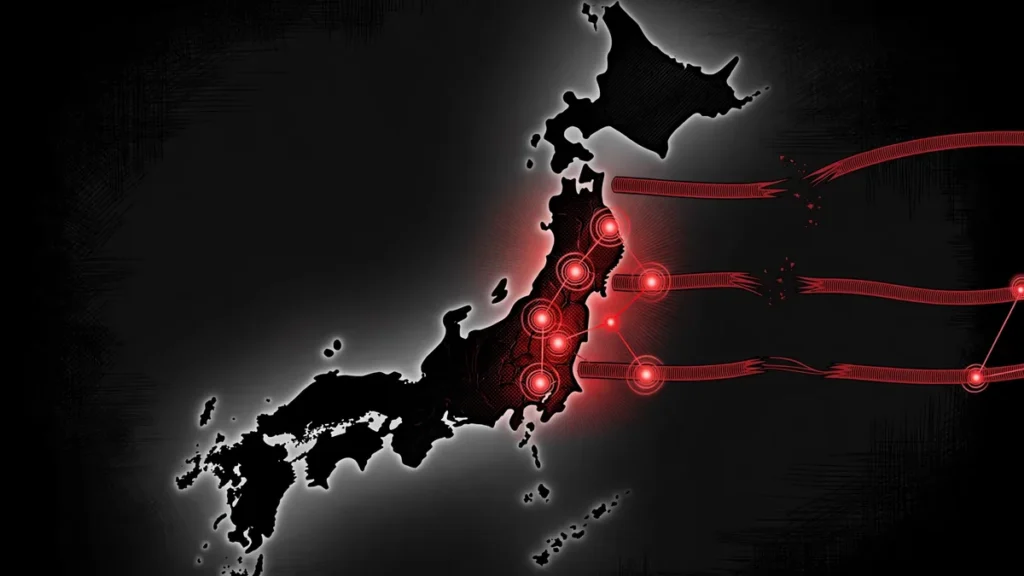
IDCF Cloud is the cloud computing platform of IDC Frontier, a Japanese cloud and data-centre company that operates as a subsidiary of SoftBank Group. The platform rents virtual servers, storage and networking to businesses and public entities, which use it to run websites, applications and business systems in Japanese data centres.
The attack was confined, according to the company, to East Japan Region 1. IDC Frontier said it had found no evidence of unauthorised access in the other zones — radian and newton — or in East Japan Regions 2 and 3 and West Japan Region 1. IDCF Cloud Type S and IDCF Private Cloud sit outside the stated scope of the incident. Even so, the company kept management consoles closed across all regions as a precaution, a signal of how seriously it took the possibility that the attackers had reached the control plane.
By the numbers: what is confirmed and what is claimed
| Metric | Figure | Source |
|---|---|---|
| CONFIRMED — IDC Frontier or customer disclosures (2+ sources) | ||
| Organizations affected | 495 companies and local governments | IDC Frontier notices (via NHK World, BleepingComputer) |
| Zones stopped, unable to restart | 4 — tesla, henry, pascal, joule | IDC Frontier third report, Oct 8 |
| Attack start | Oct 7, 2026, ~3:40 a.m. JST | IDC Frontier notices |
| Nissui logistics centres disrupted | 17 distribution centres | NHK World |
| JR East + View Card records possibly exposed | ~6.09 million (mostly email addresses) | Company notices (via Kyodo) |
| JR Kyushu email addresses possibly exposed | Up to 1.3 million | JR Kyushu statement |
| REPORTED — attacker claims from console screenshots (unverified by IDC Frontier) | ||
| Databases encrypted | 225, totalling 3.6 PB | Attacker message (screenshots via BleepingComputer) |
| Virtual machine disks locked | 16,000 | Attacker message |
| Snapshots wiped | 554,153 | Attacker message |
| Hypervisors reached | ~239–240 | Attacker message (BleepingComputer; nationalcybersecurity.com) |
| Backup capacity removed | 41.5 PB | Attacker message (nationalcybersecurity.com) |
| Claimed breach duration | 7 minutes | Attacker message |
Caveat: the CONFIRMED figures come from IDC Frontier’s incident reports or the affected companies themselves. The REPORTED figures are the attacker’s own claims, visible on customer consoles before access was revoked; IDC Frontier has not confirmed them, and the attacker’s numbers conflict with each other (3.6 PB encrypted versus 41.5 PB of backup capacity removed).
Why the IDCF attack matters for cloud security
The most dangerous part of this incident is not its technical detail — it is its structure. A single intrusion into one region of a single provider took out services for nearly 500 organizations at once. That concentration effect is exactly the systemic risk that regulators and insurers have been warning about for years, and October 2026 delivered a live demonstration.
The incident also punctured a comfortable assumption. Many businesses act as though the provider handles backups: snapshots, copies and replicas all live inside the same infrastructure. When the provider’s own environment is the thing that fails, those snapshots can be destroyed along with the servers. IDC Frontier’s own advice — rebuild elsewhere and restore from your own backups — is the backup industry’s message of the decade, delivered the hard way.
There is a second lesson in how customers were told. According to the Asahi Shimbun, as reported by Japan Cyber Watch, Ibaraki Prefecture was initially informed by SoftBank that the cause was a “data centre power outage” and did not learn it was ransomware until the evening of October 7. Poor crisis communication compounds technical failure — and governments took notice. The incident was reported to the supervising ministry and the Tokyo Metropolitan Police, and Japan’s regulators are now under pressure to impose new resilience rules on domestic cloud providers.
This is also not an isolated event in 2026. Ransomware crews have repeatedly gone after the software layer that runs other people’s businesses — see our reporting on the KillSec takedown and the FBI and CISA warning about Gunra ransomware and the Warlock attacks on SharePoint. Google security research, cited in recent reporting on this incident, found that virtualisation infrastructure was targeted in roughly 43 percent of the ransomware intrusions it responded to in 2025, up from 29 percent in 2024. The IDCF attack fits that trend — except at provider scale.
What this means for US/UK/EU readers
For businesses outside Japan, the IDCF incident is a mirror, not a distant story. If your company runs workloads on any single cloud provider — AWS, Azure, Google Cloud, or a regional platform — your backup strategy has the same single point of failure. The actionable version of this story:
- Keep at least one immutable, offline backup with a different provider, in a different account, and test restores regularly. Snapshots inside the same platform died with the platform here.
- Read your contract. Know exactly what your provider promises — and does not promise — about recovery. IDCF Cloud’s terms left recovery squarely with the customer.
- Plan for provider outages, not just your own. Multi-region design helps, but IDCF shut management consoles across all regions. A failover plan that depends on the same provider’s consoles is a hope, not a plan.
- Watch for supply-chain fallout. Over 180 independent software vendors reportedly ran on IDCF Cloud; when a provider falls, hundreds of downstream services go with it. Know which of your vendors sit on small providers.
- Expect regulatory movement. If Japanese regulators respond with cloud-resilience rules, the EU and others are likely to follow — compliance teams should track this.
Different perspectives
Cybersecurity analysts have framed the attack as a watershed: the moment cloud ransomware went from theory to provider-scale reality. As one security write-up put it, the concentration effect — one intrusion, 495 organizations down — is the part of the story worth watching, more than any single technical detail.
Victims’ disclosures have been more granular and less theoretical. JR East and View Card’s notices about millions of potentially exposed email addresses show how a single provider breach becomes a consumer-data incident. Nissui’s logistics shutdown — 17 distribution centres unable to receive or ship — shows how it becomes a physical-economy incident.
The attacker’s own framing, visible in the console message, was swagger: seven minutes, it taunted, to take the region apart. Security researchers treat such claims with scepticism — attackers routinely inflate figures — but the underlying evidence (four dead zones, hundreds of organizations down) needed no embellishment.
What to watch next
- Attribution: no ransomware group has been named. Watch for a claim on a dark-web leak site — or a police announcement, given the Tokyo Metropolitan Police are involved.
- Data theft: IDC Frontier says it is investigating whether information leaked. The JR East/View Card and JR Kyushu disclosures are about related systems; confirmed theft from the cloud environment itself remains unproven.
- Intrusion route: an external security firm is investigating. Whether the attackers entered through a management interface, a VPN, or a supply-chain path will shape every lesson drawn from this.
- Recovery timeline: no timeline has been given for East Japan Region 1. Some customers, like the e-commerce platform FutureShop, already moved services to other infrastructure.
- Regulatory response: whether Japan’s regulators impose new resilience requirements on domestic cloud providers — and whether the EU follows.
Frequently asked questions
What is IDCF Cloud and who owns it?
IDCF Cloud is the cloud computing platform operated by IDC Frontier, a Japanese cloud and data-centre company that is a subsidiary of SoftBank Group. It rents virtual servers, storage and networking to businesses and public entities in Japan.
How many organizations were affected by the IDCF ransomware attack?
IDC Frontier disclosed that 495 contracting companies and local governments were affected, a figure corroborated by BleepingComputer’s reporting and Japanese outlets. The number refers to customers using the affected environment; it does not mean every customer’s network was compromised.
Was any data stolen in the IDCF Cloud attack?
IDC Frontier said it is investigating whether information leaked, but no data theft from the cloud environment has been confirmed. Separately, JR East, View Card and JR Kyushu disclosed that millions of email addresses in related systems may have been exposed. No ransomware group has claimed responsibility or published stolen data.
Can customers recover their data after the IDCF attack?
Only from their own backups. IDC Frontier’s third incident report said data in the four stopped zones (tesla, henry, pascal and joule) would be difficult to retrieve or restore, and advised customers to rebuild in a new environment using backups they hold themselves.
What is a ransomware-as-a-service attack, and is the IDCF attack one?
Ransomware-as-a-service is a model where developers lease ransomware tools to affiliates. IDC Frontier has not named a group or described the model behind this attack — see our explainer on the KillSec takedown for how that model works and how police counter it.
Sources
- NHK World-Japan: Japan cloud service hit by ransomware attack
- BleepingComputer: Ransomware attack disrupts Japan’s IDCF Cloud used by govt clients
- SecNews.gr: IDCF Cloud: Ransomware hits 495 organizations in Japan
- tsnmedia.org: Cyber Breaches — SoftBank Cloud Ransomware
- National Cyber Security Consulting: SoftBank national cloud arm attacked in ‘seven minutes’
Discussion 0
Share analysis, corrections, or context. Be civil — comments are moderated.