
WarBrief Live | October 11, 2026 | Conflict Zones
Five Russian guided aerial bombs struck residential buildings in the southern Ukrainian city of Zaporizhzhia in the early hours of October 10, 2026, killing at least 20 people, including three children, and wounding 18. The Zaporizhzhia strike came barely a day after US President Donald Trump announced a deal with Vladimir Putin to let Russian diesel flow back into US and global markets — a move Kyiv says will fund the very bombs that fell on its cities.
The fallout did not stay in Ukraine. On October 10, Trump told reporters it was “time for Ukraine to get a new president,” railing against Kyiv’s strikes on Russian refineries — while EU foreign policy chief Kaja Kallas answered the diesel deal by promising the bloc’s largest-ever sanctions listing against Russia’s war machine, due for approval on October 12.
Update — October 11: Trump later announced an “energy ceasefire” between Russia and Ukraine, but Russian strikes hit Kharkiv’s CHP-5 power plant and Kyiv’s grid within hours of the announcement.
Key Takeaways
- At least 20 people, including three children, were killed and 18 wounded when five Russian guided aerial bombs hit residential buildings in Zaporizhzhia on October 10, 2026, according to Ukraine’s State Emergency Service, as reported by Reuters.
- The strike came one day after Trump announced an agreement with Putin for Russia to supply over 300,000 tonnes of diesel immediately, backed by a temporary US Treasury license running to April 2027.
- President Zelenskyy said Russia “expressed its thanks for the lifting of sanctions on diesel exports by dropping five glide bombs” on Zaporizhzhia, and warned that easing pressure means Moscow can “keep dropping bombs on cities.”
- Zelenskyy also announced Ukraine will receive F-16 ammunition from Finland in the coming days to intercept jet-powered Shahed drones, after coordinating with Finnish President Alexander Stubb.
- Overnight from October 10 to 11, Russia launched 116 strike drones — 95 of them jet-powered — at targets across Ukraine; 94 were shot down or suppressed. The diplomatic row escalated as Trump said Ukraine should “get a new leader,” while the EU answered the diesel deal with its largest-ever sanctions listing, due October 12.
What happened in Zaporizhzhia on October 10, 2026?
Around 5 a.m. local time, Ukraine’s Air Force warned that Russian tactical aircraft had launched guided aerial bombs toward Zaporizhzhia, the Kyiv Independent reported. Five guided aerial bombs then struck a residential neighborhood simultaneously, according to Mykhailo Semikin, acting head of the Zaporizhzhia regional military administration. One strike reduced part of a five-story apartment building to rubble, trapping civilians beneath the masonry; the building’s entrance partially collapsed to the second-floor level.
The death toll climbed through the day as rescuers worked the rubble: early reports of eight dead rose to 12, then 15, 17, and finally at least 20 killed, including three children, with 18 wounded, Reuters reported late on October 10 (later reporting updated the toll to 21, including four children). A six-year-old girl was among the dead. Rescuers pulled a woman alive from the wreckage after she had been trapped for more than eight hours, and three people had been rescued by 6:15 p.m., Ukraine’s State Emergency Service said. Interior Minister Ivan Vyhivskyi said teams were racing the threat of a “double-tap” follow-up strike to clear the debris. October 11 was declared a day of mourning in Zaporizhzhia.
The attack was the third mass-casualty strike on Ukraine within a week. Nearly 80 civilians had already been killed in Russian strikes on the two preceding days — including roughly 30 killed by a bomb in the eastern garrison city of Kramatorsk and 22 by a missile in Pryluky, 80 miles east of Kyiv, according to Reuters, as covered in WarBrief’s Kramatorsk analysis. It was also the second straight day of strikes on Zaporizhzhia itself: a day earlier, Russian guided bombs hit residential areas of the city, killing at least one person and injuring seven others, including a child.
The same day, missiles struck Kyiv in a daytime attack that wounded four people, Kyiv mayor Vitalii Klitschko said, per the South China Morning Post. And the bombardment did not stop there: overnight from October 10 to 11, Russia launched 116 strike drones at Ukraine — 95 of them jet-powered — from five directions, Ukrainska Pravda reported, citing Ukraine’s Air Force. Air defenses shot down or suppressed 94 as of 8:30 a.m., with 10 drones striking seven locations and roughly 10 still airborne.
Why did the strike come a day after the Trump–Putin diesel deal?
The timing was impossible to ignore, and Kyiv made sure nobody did. On October 9, Trump announced on social media that a “highly successful” phone call with Putin had produced an agreement for Russia to supply diesel to the United States and global markets: more than 300,000 tonnes immediately, another 500,000 tonnes in November, one million tonnes “immediately thereafter,” and three million tonnes “within a short period of time,” The National reported, citing Trump’s post. The US Treasury Department’s Office of Foreign Assets Control immediately issued a temporary general license authorizing the sale, delivery, offloading, and importation of Russian-origin diesel into the US until April 2027 — a stunning reversal of years of American pressure on Moscow over the war, aimed at taming fuel prices ahead of the US midterm elections on November 3. Reuters reported US diesel prices had reached $6.28 a gallon.
Zelenskyy tied the two events together in blunt terms. Posting on X on October 10, he wrote: “Today, Russia expressed its thanks for the lifting of sanctions on diesel exports by dropping five glide bombs on residential buildings in Zaporizhzhia.” He added that Moscow reads “any easing of pressure to mean they can keep fighting, to mean they can keep dropping bombs on cities,” and that “different signals are needed.”
The diesel deal drew swift condemnation beyond Kyiv. Democratic Senators Chuck Schumer, Jeanne Shaheen, and Elizabeth Warren called the six-month authorization “a total betrayal of Ukraine, our European allies and American national security,” accusing Trump of funding Russia’s war effort to offset fuel price increases, the Kyiv Independent reported. Zelenskyy said on Telegram that allowing Russia to sell petroleum products “is an investment in the war, which must be ended, not prolonged,” and separately called the move “unworthy” and “weak,” Agence France-Presse reported via Gulf News. The Kremlin, for its part, said Russia had “reaffirmed its readiness” to supply oil and oil products to American and world markets — and the Russian government partially lifted its own ban on diesel exports with immediate effect on October 10, Reuters reported.
On October 10 the row turned personal. Asked about the criticism, Trump told reporters at the White House that Ukraine should “get a new leader who can make a deal” and that “I think it’s time for Ukraine to get a new president,” CNN reported. Trump said Zelenskyy had disobeyed his order to stop striking Russian refineries — “He’d better damn well stop” — and blamed the refinery campaign for worsening global fuel shortages caused by the US-Israel war on Iran. A US official told CNN that Washington had repeatedly asked Kyiv to halt its attacks on Russian diesel refineries, to no avail. UK Prime Minister Andy Burnham responded by reiterating “complete solidarity” with Zelenskyy in a phone call and saying Britain would “strengthen its sanctions on Russia,” the Straits Times reported, citing Reuters.
Whether the fuel will actually flow is another question: analysts note Russia’s refineries have been damaged by months of Ukrainian strikes and that Moscow itself has restricted diesel exports, leaving the physical volumes uncertain even with a legal license in place. Diesel futures fell almost 5 percent after the announcement, AZE.US reported — but analysts quoted by Reuters doubted the extra supply would deliver a sustained decline.
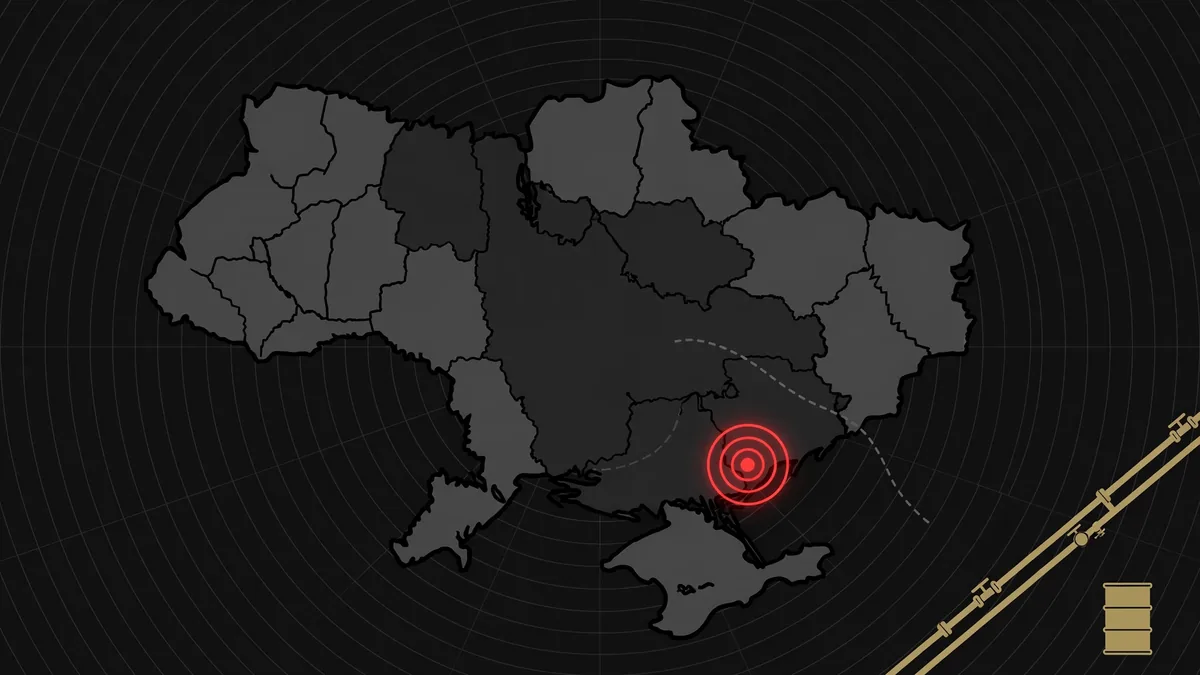
By the numbers: the Zaporizhzhia attack and the diesel deal
| Metric | Figure | Source |
|---|---|---|
| Guided aerial bombs that struck Zaporizhzhia | 5 | Zelenskyy, State Emergency Service (via Reuters) |
| Killed in Zaporizhzhia, October 10 (latest official figure) | At least 20, including 3 children | Ukraine State Emergency Service, via Reuters, Oct 10 |
| Wounded in Zaporizhzhia | 18, including 3 children | State Emergency Service, via Reuters |
| Civilians killed across Ukraine in the preceding four days | More than 60 | Reuters |
| Diesel to be supplied “immediately” | Over 300,000 tonnes | Trump, via The National |
| Further diesel: November, then “immediately thereafter” | 500,000 tonnes; then 1,000,000 tonnes | Trump, via Kyiv Independent |
| OFAC temporary general license duration | Until April 2027 | US Treasury, via The National / Gulf News |
| US average diesel price at time of deal | $6.28 per gallon | Reuters, via AZE.US |
| Strike drones launched at Ukraine overnight Oct 10–11 | 116 (95 jet-powered); 94 downed/suppressed as of 8:30 a.m. | Ukrainian Air Force, via Ukrainska Pravda |
| EU sanctions listings due for approval Oct 12 | ~1,600 (743 individuals + 826 entities, +77 more) | Ukrinform / Kaja Kallas |
Caveat: casualty figures rose throughout October 10 as rescue operations continued; treat earlier single-source tallies as preliminary. Later reporting (Reuters, October 11) updated the Zaporizhzhia toll to 21 killed, including four children. The “300,000 tonnes immediately” figure is the White House’s announced commitment; physical delivery is unverified.
Background and timeline
- February 2022: Russia launches its full-scale invasion of Ukraine; the US and partners impose sweeping sanctions on Russian energy.
- October 2025: The US imposes sanctions on Russian oil companies over the war, according to Reuters.
- October 8–9, 2026: Nearly 80 civilians are killed in Russian strikes across Ukraine, including the Kramatorsk bus stop bombing and a missile strike on Pryluky; a night strike on Zaporizhzhia kills one and wounds seven.
- October 9, 2026: Trump announces the diesel deal with Putin after a phone call; OFAC issues its temporary general license to April 2027; Zelenskyy and US senators condemn the move. Trump’s envoys Steve Witkoff and son-in-law Jared Kushner are meeting Ukrainian officials in Miami on a war-ending proposal at the same time.
- October 10, 2026, ~5 a.m.: Ukraine’s Air Force warns of guided bombs inbound on Zaporizhzhia; five strike residential buildings. Missiles hit Kyiv in a daytime attack, wounding four.
- October 10, 2026: Zelenskyy condemns the strike on X, speaks with Finnish President Stubb (F-16 ammunition incoming) and French President Macron (air defense coordination). Trump tells reporters Ukraine should “get a new leader,” and that “I think it’s time for Ukraine to get a new president.” EU foreign policy chief Kaja Kallas announces the bloc’s largest-ever sanctions listing against Russia’s war machine, due for approval by EU foreign ministers on October 12. Russia partially lifts its diesel export ban.
- October 10–11, 2026 (overnight): Russia launches 116 strike drones (95 jet-powered) at Ukraine; 94 downed or suppressed as of 8:30 a.m., 10 striking seven locations. October 11 is declared a day of mourning in Zaporizhzhia. Reuters reports Yandex’s Vladimir-region data centre was completely shut down after a drone attack — the third Yandex data centre taken out in days.
Why it matters
The Zaporizhzhia strike matters for three reasons beyond its human toll. First, it crystallizes the political weaponization of energy policy: a sanctions-easing measure sold in Washington as inflation relief landed in Kyiv as a signal of impunity, and both sides’ narratives are now locked to a body count. Second, the strike continues an escalating pattern of Russian aerial attacks on Ukrainian cities — the third mass-casualty event in a week — testing whether Ukraine’s layered air defenses can cope with the volume of guided bombs and jet-powered Shahed drones. Third, the episode exposes the fragility of the US-brokered diplomacy track: Witkoff and Kushner were in Miami with Ukrainian officials discussing an end-of-war proposal at the very moment Trump was announcing the fuel deal with Putin.
Ukraine’s response has been to push harder on two tracks at once: squeezing Russia’s revenue options diplomatically while begging partners for more air defense. Zelenskyy said Ukraine is “preparing meetings and coordinating steps” to counter the extra revenue Moscow will receive from the diesel deal — and his call with Stubb yielded a concrete near-term win: specialized ammunition for Ukraine’s F-16s arriving “in the coming days” to shoot down the jet-powered Shahed drones that ground-based defenses struggle to catch. The drone war is now mutual: Ukraine’s campaign against Russian energy and digital infrastructure has expanded beyond refineries — Reuters reported on October 11 that a drone attack completely shut down Yandex’s Vladimir-region data centre, the third Yandex data centre taken out in days after strikes on its Kaluga and Sasovo facilities. That campaign is precisely what enraged Trump — and it is also Ukraine’s most potent economic lever against Moscow.
Different perspectives
Kyiv’s view: Easing sanctions without a lasting de-escalation deal rewards aggression. Zelenskyy’s framing is explicit — every extra billion dollars from energy exports buys weapons parts, drone upgrades, missiles, and mercenaries, so Russia will stop only when its capacity to fight shrinks.
Washington’s view: Trump framed the deal as consumer relief — lower diesel prices for American farmers, truckers, and households before the midterms — while insisting Washington remains Ukraine’s “strong partner.” The OFAC license was written to exclude Russia’s central bank, national wealth fund, and finance ministry.
Moscow’s view: The Kremlin cast the deal as normal commercial energy cooperation, “reaffirming its readiness” to supply world markets. Russia’s silence on the Zaporizhzhia strike follows its standard pattern of not commenting on strikes on Ukrainian cities.
Critics in Congress and Europe: Schumer, Shaheen, and Warren argued the deal undercuts bipartisan legislation passed weeks earlier to curb Russian energy revenues — and lands as US officials press European allies to hold the sanctions line. Europe is answering by tightening rather than following: EU foreign policy chief Kaja Kallas announced on October 10 that EU foreign ministers will approve the bloc’s largest-ever sanctions listing — around 1,600 individuals and entities tied to Russia’s war machine — on October 12, Censor.net reported. “Suspending sanctions on Russian diesel provides Moscow with more revenues to wage war,” Kallas said. “This is not the time to ease pressure on Russia, and Europe won’t.” UK Prime Minister Andy Burnham backed Zelenskyy directly, reiterating “complete solidarity” and saying Britain would strengthen its own sanctions on Russia.
What this means for US/UK/EU readers
Fuel prices: The deal’s premise is cheaper diesel — and diesel futures did dip ~5 percent on the news. But analysts quoted by Reuters question whether announced Russian volumes will translate into sustained declines, especially given damaged Russian refining capacity. If you are watching US pump prices or European heating-oil and freight costs, treat the dip as a short-term signal, not a new price regime. (Educational context only — not financial advice.) For the deeper mechanics of how conflict moves fuel costs, see WarBrief’s explainer on why diesel prices rise during war.
Travel: No new travel restrictions followed the strike, but the UK Foreign Office and US State Department advisories against all travel to Ukraine remain in force; the Zaporizhzhia region sits less than 30 km from the front line in places. Airspace over Ukraine remains closed to civilian traffic.
Markets and security: Europe’s energy-security debate gets another data point: after years of weaning off Russian hydrocarbons, a US license re-admitting Russian diesel complicates the sanctions consensus — a friction point to watch in NATO and G7 statements this week. On Monday, October 12, EU foreign ministers are expected to approve roughly 1,600 new sanctions listings against Russia’s military-industrial complex (743 individuals, 826 entities, plus 77 more linked to Russia’s elections in occupied Ukraine, per Ukrinform) — a mass designation exercise that will freeze assets and ban travel for the newly listed, even if it changes less on the commodity markets than sectoral bans would. Britain, meanwhile, is aligning with Brussels rather than Washington: Burnham pledged to strengthen UK sanctions. For the wider picture of where this war is being fought, see WarBrief’s Conflict Zones hub.
What to watch next
Four things will determine whether this episode fades or escalates. First, whether physical Russian diesel actually loads onto tankers — or whether, as analysts suspect, damaged refineries and Moscow’s own export restrictions make the announcement mostly symbolic (Russia partially lifted its diesel export ban on October 10, a step toward making the volumes real). Second, Ukraine’s promised diplomatic push to blunt Russia’s new revenue channel, including Monday’s EU foreign ministers’ decision on the bloc’s largest-ever sanctions listing. Third, the air-defense race: whether Finland’s F-16 ammunition arrives in time and whether promised Western air-defense packages materialize before the “particularly high” missile threat Zelenskyy warned of in the coming days. Fourth, the Miami track — Witkoff and Kushner’s talks with Ukrainian officials — and whether the diesel deal’s political fallout, now including a US president openly calling for Ukraine’s leader to be replaced, derails it. WarBrief will track these developments in our Intelligence Reports.
Frequently asked questions
What happened in the Zaporizhzhia strike on October 10, 2026?
Early on October 10, 2026, five Russian guided aerial bombs struck residential buildings in Zaporizhzhia, a city in southeastern Ukraine. At least 20 people, including three children, were killed and 18 were wounded, according to Ukraine’s State Emergency Service, as reported by Reuters. One strike partially destroyed a five-story apartment building, trapping civilians under rubble for hours.
What is the Trump–Putin diesel deal?
On October 9, 2026, US President Donald Trump announced an agreement with Russian President Vladimir Putin under which Russia would supply more than 300,000 tonnes of diesel immediately, 500,000 tonnes in November, and one million tonnes “immediately thereafter.” The US Treasury’s OFAC issued a temporary general license authorizing Russian diesel imports into the US until April 2027, a reversal of years of US pressure on Moscow.
Why did Zelenskyy link the strike to the diesel deal?
Zelenskyy argued that the strike came one day after Washington eased diesel sanctions, writing on X that Russia “expressed its thanks for the lifting of sanctions on diesel exports by dropping five glide bombs on residential buildings in Zaporizhzhia.” His position is that easing economic pressure signals to Moscow that it can keep fighting, and that added energy revenue will fund further attacks.
How is Ukraine responding to the strikes?
Ukraine is pursuing two tracks: diplomatic pressure to limit Russia’s new energy revenue, and urgent air-defense reinforcement. After speaking with Finnish President Alexander Stubb on October 10, Zelenskyy announced that Finland would supply ammunition for Ukraine’s F-16 fighter jets “in the coming days” — munitions specifically needed to intercept jet-powered Shahed drones.
Will the diesel deal lower fuel prices in the US and Europe?
Possibly in the short term — diesel futures fell nearly 5 percent on the news — but analysts quoted by Reuters doubt the announced volumes will produce a sustained decline, given damage to Russian refineries and Moscow’s own export restrictions. Ukraine’s ongoing strikes on Russian refineries add further uncertainty.
How is Europe responding to the US diesel deal?
By tightening, not following. EU foreign policy chief Kaja Kallas announced on October 10 that EU foreign ministers will approve the bloc’s largest-ever sanctions listing against Russia’s war machine — roughly 1,600 individuals and entities — on October 12, saying “this is not the time to ease pressure on Russia, and Europe won’t.” UK Prime Minister Andy Burnham also pledged to strengthen British sanctions on Russia after speaking with Zelenskyy.
Read next: Why Diesel Prices Rise During War: Explained (2026) — why the Trump–Putin diesel deal matters to prices.
Sources
- Reuters (via ThePrint): Russian attack on Ukrainian city kills 20, a day after Trump eases diesel sanctions on Moscow
- Kyiv Independent: Russian guided bombs hit Zaporizhzhia residential neighborhood, killing at least 20, injuring 18
- South China Morning Post: Russian attacks kill 17 in Ukraine after Trump strikes diesel deal with Putin
- Daily Sabah: Russian strikes kill 8 in Ukraine as Trump’s diesel deal backfires
- The National: Trump lifts US sanctions on Russian diesel amid price surge
- Kyiv Independent: Trump allows Russia to supply millions of tons of diesel to US, global markets
- Gulf News (AFP): Trump secures Russian diesel deal to ease energy costs ahead of midterms
- ANews: Finland to supply Ukraine with F-16s ammunition in the coming days, Zelenskyy says
- The Straits Times (Reuters): Trump-Zelensky clash over Russian diesel deal and strikes
- CNN: Trump says Ukraine should get a new leader as he spars with Zelensky over US-Russia diesel deal
- Censor.net: Kallas — the EU is preparing its largest sanctions package against Russia since the start of the war
- Ukrinform: EU ambassadors approve largest-ever sanctions list against Russia
- Ukrainska Pravda: Russia attacks Ukraine with 116 drones, 95 of them jet-powered
- Reuters (syndicated): Russia’s Yandex says data centre in Vladimir area shut down after drone attack


Discussion 0
Share analysis, corrections, or context. Be civil — comments are moderated.