WarBrief Live | October 29, 2026 | Influencer Profile
Andrius Kubilius, the European Union’s first Commissioner for Defence and Space, spent October 28, 2026, on both halves of his brief: at NATO headquarters he discussed military mobility, defence production and Ukraine support with Secretary General Mark Rutte, and the same day he co-chaired the Commission’s first dialogue with oil refiners on wartime fuel readiness.
Key Takeaways
- EU Commissioner for Defence and Space since December 1, 2024, the first holder of the new portfolio.
- Former Lithuanian prime minister (1999-2000 and 2008-2012) and member of the European Parliament (2019-2024).
- Signature file is military mobility: removing barriers so troops and equipment can move across Europe.
- On October 28, 2026, he addressed NATO’s North Atlantic Council and co-chaired the first refinery dialogue.
Who is Andrius Kubilius?
Kubilius was born on December 8, 1956, in Vilnius, and trained as a physicist at Vilnius University, according to the European Commission. He became a leader in the independence movement Sajudis, entered the Seimas, Lithuania’s parliament, in 1992 and served until 2019, led the Homeland Union – Lithuanian Christian Democrats from 2003 to 2015, and served twice as prime minister, in 1999-2000 and 2008-2012. From 2019 to 2024 he sat in the European Parliament, working on foreign affairs and security.
Why does Kubilius matter for European defence?
His post did not exist before this Commission, and creating it signalled Brussels intended to treat defence industry, procurement and mobility as a collective project. His mission letter tasks him with a White Paper on the Future of European Defence, removing mobility barriers, creating a Single Market for Defence products, and strengthening the EU-NATO partnership. For readers of WarBrief’s Intelligence Reports, he is the official behind many capability timelines.
What are his key positions?
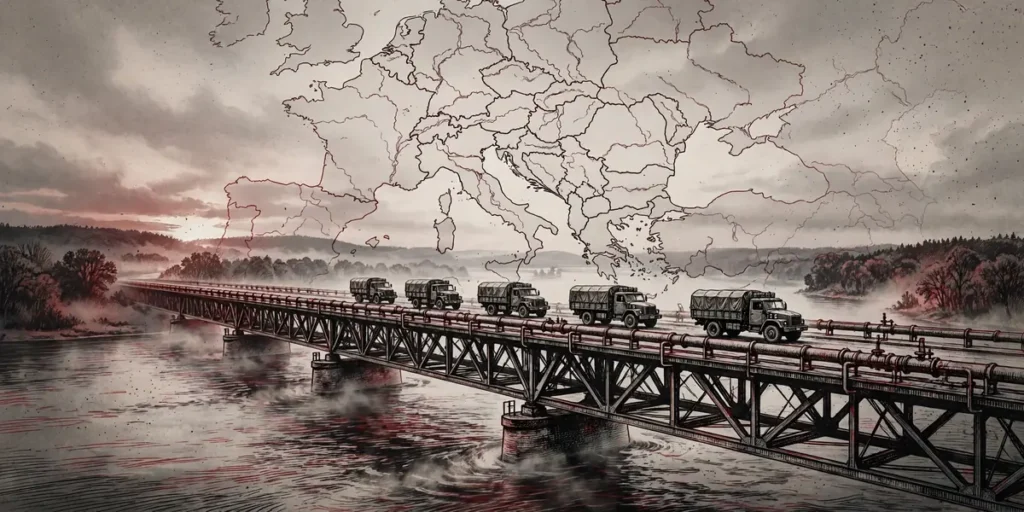
Military mobility first. The problem is regulatory and physical: border permissions, differing rail gauges and load limits, bridges that cannot carry heavy armour, and missing infrastructure. NATO made the same point on October 28, saying moving equipment and personnel across Europe is critical for deterrence, and requires both regulatory fixes and infrastructure.
Defence production and Ukraine support. At the North Atlantic Council, Kubilius highlighted readiness, defence production and consistent Ukraine support. Rutte praised the EU’s decision to enable the Ukraine Support Loan, funding support through NATO’s Prioritised Ukraine Requirements List (PURL), which delivers equipment including air defence.
Fuel readiness as a defence issue. The refinery dialogue, co-chaired with Energy Commissioner Dan Jorgensen, brought energy into defence planning. EU refineries supply about 70% of Europe’s jet fuel and 85% of its diesel, according to the Commission, yet about a quarter have closed over two decades and capacity has fallen around 10%. Kubilius argued readiness depends on production capacity, a competitive refining industry, emergency-usable transport and resilient infrastructure, and proposed examining whether the Cold War-era Central European Pipeline System could be expanded to the eastern flank. Allies had approved a 27 billion euro NATO Fuel Supply Chain plan on July 22 to modernise storage and distribution, particularly in the east and south-east. WarBrief’s profile of Lithuania’s military capabilities sets out the national side of that picture.
What did Kubilius say on October 28, 2026?
At the refinery dialogue, Kubilius framed fuel as a planning problem, not a prediction of war: peacetime military fuel use is about 8% of capacity by industry data, but would rise sharply in a crisis. He declined to say how long Europe could sustain its defences on current reserves, citing confidentiality. As reported by Brussels Reporter, he said:
“During military crisis, according to NATO force model, during the first 10 days, NATO will need to move and to sustain 100,000 troops, and we can imagine what does it mean in terms of consumption of fuel and production of fuel.”
The dialogue meets again early in 2027, and its conclusions should feed into future EU military mobility legislation.
Frequently asked questions
Who is Andrius Kubilius?
Andrius Kubilius is the European Commissioner for Defence and Space, in office since December 1, 2024, and a former Lithuanian prime minister (1999-2000 and 2008-2012).
What is military mobility?
Military mobility is the ability to move troops and equipment quickly across borders in a crisis. It depends on permissions, rail and road infrastructure, bridges able to carry heavy vehicles, and fuel supply, and it is a joint EU-NATO priority.
Why did Kubilius meet oil refiners?
He co-chaired the Commission’s first refinery dialogue on October 28, 2026, because EU refineries supply about 70% of Europe’s jet fuel and 85% of its diesel.
Sources
- NATO: Secretary General highlights strong NATO-EU cooperation during visit of Commissioner Kubilius
- European Commission: Andrius Kubilius, Commissioner for Defence and Space
- EconoTimes: EU Urges Refiners to Keep Fuel Capacity Ready for Military Crises
- Brussels Reporter: EU defence chief warns of fuel shortages amid conflict risks
- Trans.info: Diesel prices 2027: EU warns of high costs as fuel aid ends