WarBrief Live | October 30, 2026 | Intelligence Tools
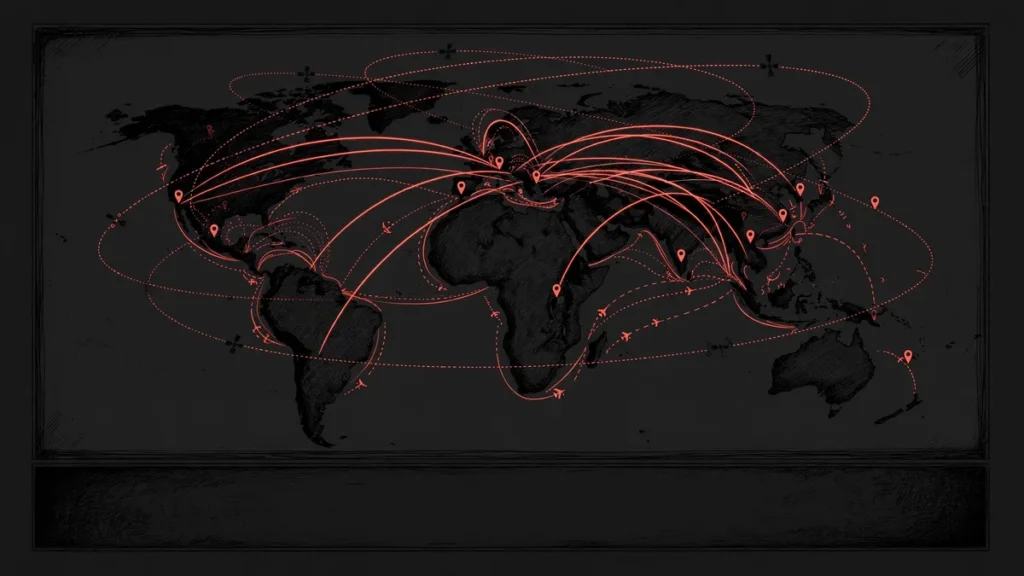
ACLED is a nonprofit project that turns reported political violence and protests around the world into a searchable dataset of dated, located events.
Key Takeaways
- Events are coded by date, location, actors, type, and reported fatalities.
- Coverage went worldwide in 2022, with weekly updates.
- Free for public, non-commercial use with attribution; commercial and public-sector users need a license.
- Built from reported events, so fatality figures are estimates that get revised.
What is ACLED?
ACLED stands for the Armed Conflict Location and Event Data Project. Rather than summarizing a war in one narrative, it breaks conflict into individual events, each recorded with its date, location, actors, event type, and fatalities where reported. Created in 2005 by Clionadh Raleigh, a University of Sussex professor of political violence and geography, as doctoral research. Since 2014 it has operated as a nonprofit organization incorporated in Wisconsin, and in 2022 it expanded to worldwide coverage with weekly updates.
Events are coded identically, so they can be compared across countries and time; a weekend battle is recorded as separate events per day. Events fall into six types: Battles, Explosions and remote violence, Violence against civilians, Protests, Riots, and Strategic developments. Coverage spans 244 countries and territories, although the earliest data date from 1997 and historical depth varies by country.
How do analysts use ACLED data?
Analysts use ACLED first to count and compare: filtering by country, actor, event type, and date shows whether violence is rising, spreading, or shifting from battles to attacks on civilians. Planners use the same filters to judge risk, and journalists use them to judge whether an incident is part of a pattern or an outlier. The data download as spreadsheets, so much of this work needs only basic spreadsheet skills.
ACLED also builds products on the dataset, including a Conflict Alert System forecasting monthly event counts in tracked contexts, and a Conflict Index ranking countries by deadliness, danger to civilians, spread, and armed-group numbers. Its numbers often surface in news coverage: in 2026, ACLED recorded 100,114 conflict-related fatalities in Myanmar since the February 2021 coup, counted more than 1,200 distinct armed groups there, and ranked Myanmar the second most conflict-affected country in 2025, behind only the Palestinian territories.
What does ACLED cost, and how do you access it?
ACLED data are free for public, non-commercial use with attribution. Access works through a free myACLED account, which unlocks downloads and extra features. Commercial entities need a corporate license; governmental or multilateral organizations need a public-sector license. Students, journalists, and independent analysts can thus work with the data at no cost.
What are ACLED’s limitations?
ACLED’s biggest limitation is also its method. Almost all data come from secondary reports: media, civil-society groups, institutional reports, and local observatories. Where reporters cannot go, events go unrecorded, and where coverage is thin, the dataset thins with it. ACLED is therefore a record of reported violence, not a complete census of it, and comparisons between a well-covered country and a closed one can mislead.
Fatality figures deserve particular caution. ACLED itself warns that fatality numbers are frequently the most biased and poorly reported component of conflict data. Its Myanmar total illustrates the point: there is no official toll, and estimates from different monitors vary widely because they apply different counting rules to different sources. Figures are also revised as new information arrives. Used with those caveats, ACLED is one of the most consistently cited conflict datasets available; used as a precise body count, it will disappoint. See also: WarBrief’s tools collection and Taiwan Strait profile.
Frequently asked questions
Is ACLED free to use?
Yes, for public, non-commercial use with attribution, via a free myACLED account.
Does ACLED cover every country?
Worldwide since 2022, spanning 244 countries and territories, but historical depth varies; earliest data are from 1997.
Is ACLED a government project?
No. It is an independent nonprofit, founded as academic research in 2005 and incorporated in Wisconsin since 2014.
Sources
- ACLED: End User License Agreement
- ACLED: Download data files
- Princeton: ACLED resource page
- Carahsoft: ACLED Analysis
- beSpacific: ACLED overview
- Burma Insight: Myanmar toll tops 100,000
- My Republica: Myanmar death toll hits 100,000