WarBrief Live | October 24, 2026 | Sanctions
The next Iran sanctions wave is taking shape as a pattern, not a single announcement. Since early October 2026, Washington has moved against tankers, shipping agents, a law firm accused of hiding vessel ownership, and financial facilitators, while London has tightened its own measures. With US midterms on November 3, 2026, and a wind-down deadline of November 20, 2026, for the newly designated law firm, the question is where the next designations will land.
Key Takeaways
- Operation Economic Outcast, announced August 24, 2026, now targets the service providers behind Iran’s oil trade, not only tankers.
- Three US rounds in October 2026 hit shadow-fleet vessels, shipping agents, a law firm and financial facilitators.
- The UK expanded sectoral Iran sanctions on September 29, 2026, and designated two more individuals on October 12, 2026.
- No next round has been announced. Targets discussed below are analysis, not confirmed designations.
Target overview: Iran’s oil, shipping and finance networks
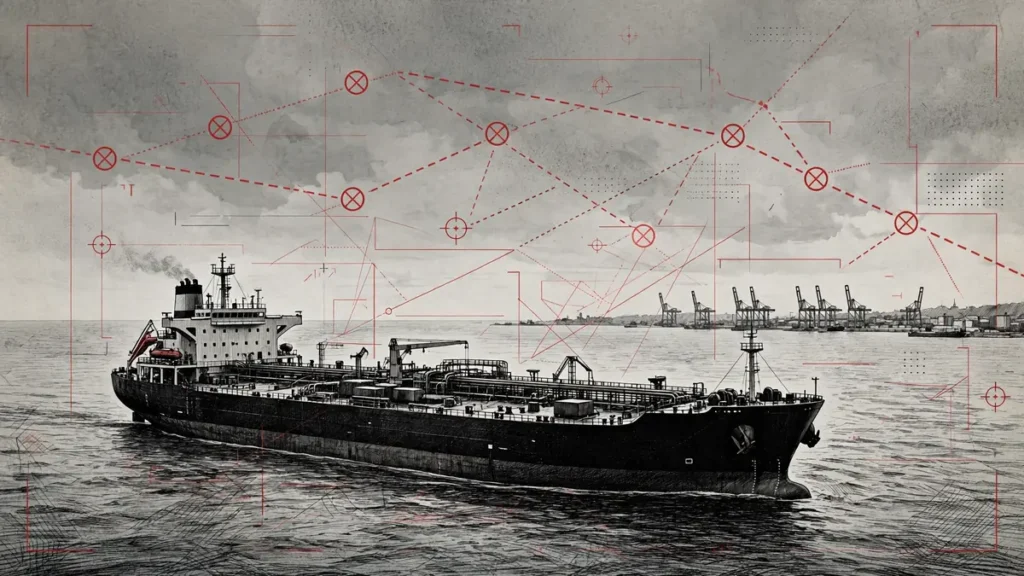
Iran’s sanctions exposure centres on three linked systems: oil and petrochemical exports moved in part through an ageing shadow fleet of tankers; the shipping and legal infrastructure around those vessels, including managers, agents and shell companies; and finance, the banks and intermediaries that let export revenue reach Tehran. US officials say that revenue funds Iran’s military, missile and cyber programmes and the Islamic Revolutionary Guard Corps (IRGC). The backdrop is the war the United States and Israel launched against Iran on February 28, 2026, after which Washington has relied heavily on a naval blockade of Iranian ports alongside economic pressure, according to The Times of Israel. Start with WarBrief’s sanctions hub, our profile of the Iranian oil shadow fleet and our watchlist on the IRGC economic empire.
Measures in place: what designation actually does
US designations under Executive Order 13902, which targets Iran’s petroleum and petrochemical sectors, generally block property of designated persons in the United States or held by US persons, and bar US persons from dealing with them unless authorised by the Office of Foreign Assets Control (OFAC). Entities owned 50 percent or more by blocked persons are themselves treated as blocked, and foreign banks that knowingly facilitate significant transactions for them risk secondary sanctions. The UK adds asset freezes, travel bans and sectoral bans on investment, banking relationships and insurance. On September 23, 2026, the UK’s Office of Financial Sanctions Implementation (OFSI) said it would presume denial of licence applications from five designated Iranian banks in the UK — Bank Sepah, Melli Bank plc, Bank Saderat, Persia International Bank and Bank Tejarat — with an existing general licence expiring on October 22, 2026, and not renewed.
Recent actions: three US rounds and a UK tightening
| Date | Action | Source |
|---|---|---|
| September 29, 2026 | UK Amendment Regulations take effect, expanding sectoral sanctions on finance, energy, shipping and software. | Mondaq |
| September 30, 2026 | US sanctions eight entities and five individuals over Iran weapons procurement, backing restored UN measures. | Jewish Dispatch |
| October 8, 2026 | OFAC designates 17 vessels and 18 companies in the shadow fleet; State adds 10 entities, six individuals and five vessels, per Al Jazeera. | Republic World |
| October 12, 2026 | UK designates Bazghandi and Jakki: asset freezes, travel bans, director disqualification. | UK notice |
| October 15, 2026 | US designates 16 individuals and 10 entities over financial circumvention, including an Iraqi bank, per Shafaq News. | Shafaq News |
| October 21, 2026 | OFAC designates Karnakis and Karnakis, five individuals, four companies and nine vessels; wind-down licensed to November 20, 2026. | Shafaq / ToI |
The October 21 round is the clearest signal of the current phase. Treasury accused Karnakis and Karnakis of setting up shell companies that hid the true owners of vessels carrying Iranian oil, petrochemicals and steel. Treasury Secretary Scott Bessent said: “Whether you are conducting illegal oil transfers at sea or sitting in the corner office of a law firm, if you are supporting the Iranian regime, we will find you and sanction you.” In parallel, the Financial Crimes Enforcement Network (FinCEN) issued an administrative subpoena in an investigation into an unnamed Greek bank’s possible ties to Iran-linked agents, and made information requests to six other unnamed European banks, according to The Times of Israel.
What Washington could target next: analysis, not announcement
Nothing in this section is a confirmed designation. First, the service layer: if tankers were the first target and law firms and agents the second, insurers, classification societies, flag registries and port-service providers are the next logical layer. Second, finance: the FinCEN inquiries suggest investigators are following payment trails into European banks. Third, buyers and intermediaries: earlier WarBrief coverage of Chinese refiners buying Iranian crude shows where enforcement attention has historically fallen. Fourth, new sectors: in early October 2026 Washington extended sanctions authority to Iran’s automotive and railway sectors, according to The National. On timing, the November 20 wind-down deadline and the November 3 elections both matter: reporting in October suggested the administration had ruled out new military strikes before the vote, leaving sanctions as the main pressure tool in the immediate term. That reporting is attributed, not confirmed policy.
Impact: pressure on revenue, costs for everyone else
For Iran, the effect is narrower export options and higher evasion costs. For companies outside Iran, the risk is indirect exposure — dealing with a blocked person’s subsidiary, a vessel with a hidden Iranian link, or a bank processing such payments. Preliminary satellite-based data cited in press reporting suggested Iran loaded no crude onto tankers in the month before mid-October 2026, though that figure is preliminary and single-sourced. For US, UK and EU readers, the knock-on effect is higher freight rates and war-risk insurance premiums on Gulf shipping.
What to watch next
- November 3, 2026: US midterm elections — whether the pace of designations changes after the vote.
- November 20, 2026: expiry of the Karnakis and Karnakis wind-down licence — watch for follow-on designations of linked entities.
- FinCEN’s European bank inquiries: any named bank or enforcement action would mark an escalation from investigation to designation.
Frequently asked questions
What is Operation Economic Outcast?
The US Treasury campaign announced on August 24, 2026, by Secretary Scott Bessent, targeting Iran’s oil trade and evasion networks under Executive Order 13902 to cut revenue for its military, missile and cyber programmes and the IRGC.
Why was a law firm sanctioned in October 2026?
Because, according to Treasury, it set up shell companies hiding the true owners of vessels carrying Iranian oil, petrochemicals and steel. The firm did not immediately respond to requests for comment, per The Times of Israel.
Does a new sanctions round mean a specific company will be designated?
No. No next round has been announced. Possible targets here are analysis only; any future designation must be verified against the official OFAC, EU or UK OFSI lists.
This entry is educational content about sanctions regimes. It is not legal advice; companies with exposure should take advice from a qualified sanctions lawyer.
Sources
- The Times of Israel: US treasury sanctions Greek-Panamanian law firm over aid to Iranian shipping
- Shafaq News: US imposes new Iran-related sanctions
- Republic World: US imposes fresh Iran sanctions
- Mondaq: UK expands Iran sanctions — what the 2026 regulations may mean for businesses
- Mondaq: Sanctions fortnightly summary (OFSI, September 23, 2026)
- The National: US sanctions Iran’s car makers and railway operators