WarBrief Live | October 22, 2026 | Sanctions & Diplomacy
Norway has aligned its national sanctions with the European Union’s 21st package against Russia, targeting banks, the oil sector, crypto services, the shadow fleet, and the military-industrial complex. Announced October 20, 2026 and effective October 21, the move closes gaps a non-EU NATO member could otherwise leave in the EU-led regime. Educational overview only — not legal advice.
Key Takeaways
- Effective October 21, 2026, Norway’s measures mirror the EU’s 21st Russia package (adopted July 23): banks, oil, crypto, shadow fleet, military industry, plus wider trade controls.
- 33 more Russian banks face transaction bans; 94 Russian financial institutions are under full asset freezes; 22 more third-country banks are covered.
- 41 newly listed shadow-fleet vessels, support vessels now listable, and detained cargoes can be confiscated and sold.
- Norway backed the package politically on August 11; designations of 48 individuals, 168 entities, and 41 vessels were already in force since August 14.
Target overview: what Norway’s sanctions cover
Per the Norwegian government’s announcement (Ukrainska Pravda), the package spans finance, oil, crypto services, the shadow fleet, and the military-industrial complex, with expanded import-export controls. The Ministry of Foreign Affairs amended the relevant regulations to transpose the EU package into Norwegian law.
Finance dominates: transaction bans on 33 more Russian credit and financial institutions, asset freezes on 94 Russian financial institutions, and a ban on 22 more banks abroad in India, Mongolia, Nigeria, and the UAE (Euromaidan Press). Energy measures ban transactions with listed refineries processing Russian crude, including third-country refineries — a Georgian refinery joins in January 2027 — plus two Russian ports and four airports including Moscow’s Sheremetyevo. Fourteen crypto platforms in Georgia, Panama, the Marshall Islands, Belarus, and the UAE face transaction bans, with a new tool enabling bans on crypto operators across an entire third country (Baker McKenzie).
Part of the package was already in force from August 14, 2026: travel bans and asset freezes on 48 individuals, asset freezes on 168 entities, and listings of 41 shadow-fleet vessels. Named individuals include Vladimir Medinsky, Mikhail Gutseriev, Arkady Dvorkovich, Oleg Belozerov, and Alexander Zharov (Reuters).
Measures in place: the EU’s 21st package
The Council of the EU adopted the package on July 23, 2026 after weeks of negotiation, with Greece the last holdout. It added 216 designations: 48 individuals and 168 entities.
On oil, the G7 price-cap adjustment is frozen for 12 months at $44.10 per barrel, blocking an automatic rise toward about $58.50 — a Brussels-based estimate reported by The European Conservative put denied revenue near $3.5 billion over the year. On shipping, 41 more vessels were listed (over 670 total), criteria expanded to ships servicing or refueling shadow-fleet tankers, and member states may confiscate and sell detained cargoes. The EU’s Russian LNG import ban takes effect January 1, 2027, with a one-year exemption for pre-February-2022 contracts capped at 2025 volumes.
This is distinct from the EU’s 22nd Russia sanctions package, adopted October 12, 2026, which was principally a fresh list of designations rather than new measures.
Recent actions and impact
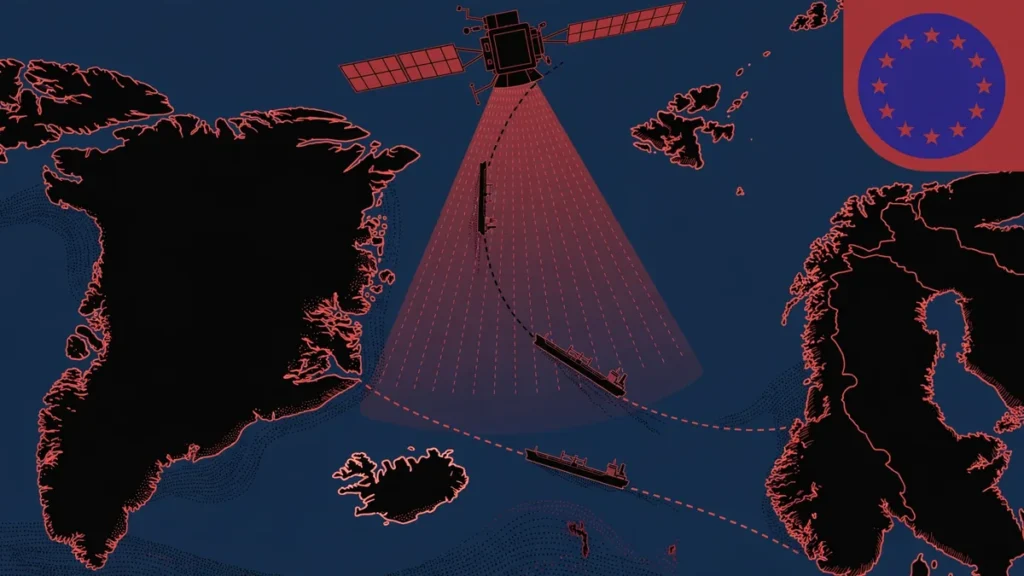
Norway is not an EU member but has joined nearly every EU Russia sanctions package. It backed this one politically on August 11, implemented the designations on August 14, and brought the full measures into force on October 21, 2026. The maritime measures serve a direct national interest: the shadow fleet sails along Norway’s coast, and a Norwegian Coastal Administration report found it a growing security and environmental threat — see also our shadow-fleet tracking entry.
For compliance teams, the effect is broader screening: more banks and third-country institutions, named refineries and ports, crypto platforms in listed jurisdictions, and tighter trade controls. Companies with Norwegian exposure should consult the official designation lists rather than summaries; our full reference sits in the sanctions hub.
Frequently asked questions
Is Norway in the EU?
No — a NATO member in the European Economic Area, but not an EU member state. It aligns with EU sanctions voluntarily and has joined nearly every EU Russia round since 2022.
What is Russia’s “shadow fleet”?
Aging, obscurely owned tankers moving sanctioned Russian oil outside the G7 price cap. The EU-listed fleet exceeds 670 vessels, and the 21st package extends listing to ships servicing or refueling them.
What does freezing the cap at $44.10 mean?
The automatic adjustment that would have raised the cap toward about $58.50 is suspended for 12 months, denying Russia that per-barrel revenue increase.
Do Norway’s sanctions apply to my business?
They bind Norwegian persons and companies, and affect anyone dealing with listed entities through Norwegian jurisdiction. Educational only — not legal advice.
Sources
- Ukrainska Pravda: Norway aligns new sanctions on Russia with EU’s 21st package
- Euromaidan Press: Norway bars deals with 33 more Russian financial institutions
- Reuters: What’s in the EU’s 21st package of sanctions against Russia
- Baker McKenzie: EU adopts 21st Russia sanctions package
- UNN: Norway has imposed new sanctions against the Russian Federation
- Babel: Norway reported new sanctions against Russia – what’s included