
Hybrid warfare represents one of the most significant challenges to international security in the 21st century. This approach to conflict combines conventional military force with irregular tactics, cyber attacks, disinformation campaigns, economic coercion, and diplomatic pressure to achieve strategic objectives without triggering a full-scale military response. Russia has emerged as the most prominent practitioner of hybrid warfare, developing sophisticated capabilities that have reshaped the security environment in Europe and beyond. The same toolkit appears as disinformation as a weapon of war in the Iran conflict.
Defining Hybrid Warfare
The concept of hybrid warfare blends the distinctions between conventional and unconventional warfare, between peace and conflict, and between military and civilian domains. Hybrid campaigns typically operate below the threshold that would trigger a conventional military response or invoke alliance defense commitments like NATO Article Five. This ambiguity is central to the strategy effectiveness, as it allows aggressors to achieve their objectives while denying responsibility and avoiding escalation.
Key characteristics of hybrid warfare include the use of special operations forces and proxies to create plausible deniability; extensive information operations to shape narratives and influence target populations; cyber attacks against critical infrastructure and government networks; economic pressure through sanctions, trade restrictions, and energy manipulation; and diplomatic isolation through international forums and bilateral relationships.

Russian Hybrid Warfare Doctrine
Russian thinking on hybrid warfare draws heavily on the work of Chief of the General Staff Valery Gerasimov, whose 2013 article outlined a vision of warfare in which non-military methods play a decisive role. The Gerasimov Doctrine emphasizes the integration of political, economic, informational, and military measures to achieve strategic objectives. While Western analysts have debated the extent to which Gerasimov represents official doctrine, the operational record clearly demonstrates Russian adoption of hybrid methods.
The annexation of Crimea in 2014 stands as the most successful example of Russian hybrid warfare. Special forces without insignia, known as little green men, secured strategic positions across the peninsula while information operations undermined Ukrainian resistance and created confusion about the nature and scale of the operation. Cyber attacks disrupted Ukrainian government communications and banking systems, and pro-Russian separatists destabilized eastern Ukraine. The operation achieved its objectives with minimal casualties and presented NATO with a strategic fait accompli.
Information Warfare
Information operations are central to Russian hybrid warfare. The concept of reflexive control involves feeding deceptive information into adversary decision-making processes to shape outcomes favorable to Russian interests. State-funded media outlets like RT and Sputnik amplify narratives designed to undermine Western institutions, exploit social divisions, and create strategic ambiguity.
Social media platforms have been extensively weaponized in Russian information operations. The Internet Research Agency, a Russian troll farm, conducted extensive influence operations targeting the 2016 US presidential election, the Brexit referendum, and elections across Europe. These operations involved the creation of fake accounts, the amplification of divisive content, and the coordination of online communities to influence public opinion.
Cyber Operations
Russian cyber operations form an integral component of hybrid warfare. Attacks on Ukrainian power grids in 2015 and 2016 demonstrated the ability to disrupt critical infrastructure. The NotPetya malware attack of 2017, attributed to Russian military intelligence, caused billions of dollars in damage globally. More recently, Russian cyber operations have targeted vaccine research, government networks, and supply chain infrastructure as part of a broader campaign of strategic competition.
Global Responses to Hybrid Warfare
NATO has responded to the hybrid warfare challenge by establishing the European Centre of Excellence for Countering Hybrid Threats in Helsinki and developing a Hybrid Analysis and Response Network. The alliance has also integrated hybrid warfare considerations into its deterrence and defense posture, including the enhancement of intelligence sharing, the development of rapid response mechanisms, and the strengthening of resilience among member states.
The European Union has developed a Hybrid Fusion Cell within the European External Action Service to analyze hybrid threats and coordinate member state responses. The EU has also imposed sanctions regimes specifically targeting hybrid warfare activities, including cyber attacks and disinformation campaigns.
The United States has established the Countering Foreign Propaganda and Disinformation Act and created the Global Engagement Center to coordinate responses to foreign influence operations. The Department of Homeland Security and the Cybersecurity and Infrastructure Security Agency have developed frameworks for protecting critical infrastructure and election systems from hybrid threats.
Lessons for the Future
The experience of Russian hybrid warfare offers important lessons for defense and security establishments. First, deterrence in the hybrid domain requires a credible capacity to attribute hostile actions and respond across multiple dimensions. Second, societal resilience, including public awareness of disinformation tactics and robust critical infrastructure protection, is essential. Third, international cooperation and intelligence sharing are vital for detecting and countering hybrid campaigns that cross national boundaries.
Conclusion
Hybrid warfare represents a fundamental challenge to the international security order. Russia sophisticated integration of military and non-military instruments has demonstrated the effectiveness of this approach in achieving strategic objectives while avoiding direct confrontation. Countering hybrid threats requires a comprehensive response that combines military preparedness, societal resilience, technological innovation, and international cooperation. Understanding the dynamics of hybrid warfare is essential for anyone concerned with contemporary security challenges.
For detailed analysis of hybrid warfare and security developments, visit our Analysis page. Subscribe to the Daily Brief for regular updates on global conflicts and security threats.
Case Studies and Practical Applications
The practical application of these technologies and strategies has been demonstrated across multiple conflict zones and security scenarios. In each case, the specific challenges and lessons learned provide valuable insights for practitioners and policymakers seeking to understand the evolving landscape of modern military and security operations.
The conflict in Ukraine has served as a particularly rich source of operational lessons. Both conventional and unconventional capabilities have been tested in high-intensity combat, revealing strengths and weaknesses that were previously theoretical. The ability to rapidly adapt tactics, technology, and organization in response to battlefield realities has proven essential, while rigid doctrinal approaches have often resulted in failure. This adaptability requires not only flexible systems but also a culture that encourages innovation and learning at all levels of military organization.
Interoperability between allied forces has emerged as a critical success factor. NATO forces operating alongside partner nations have demonstrated that common standards, shared procedures, and compatible equipment significantly enhance operational effectiveness. Exercises and training programs that build interoperability before deployment are essential investments that pay dividends in actual operations. The ability to share intelligence, coordinate fires, and conduct joint maneuver operations across national boundaries multiplies the combat power available to any single nation.
The role of private sector technology companies in modern military operations has expanded dramatically. Commercial satellite imagery, cloud computing services, artificial intelligence platforms, and communications infrastructure provided by companies like SpaceX, Microsoft, Amazon, and Maxar have become integral to military operations. This dependence creates new vulnerabilities and dependencies that military planners must carefully manage, ensuring that access to critical commercial capabilities is maintained during crises.
Training and education remain fundamental to military effectiveness despite technological advances. The complexity of modern military operations demands highly skilled personnel capable of operating sophisticated systems, making rapid decisions under pressure, and adapting to unforeseen circumstances. Investment in simulation-based training, professional military education, and experiential learning programs produces the human capital that ultimately determines military success or failure.
The strategic implications of these developments extend beyond the battlefield. Military capabilities shape diplomatic relationships, influence alliance dynamics, and affect the calculations of potential adversaries. Nations that successfully integrate emerging technologies while maintaining ready and capable conventional forces will be better positioned to deter aggression, protect their interests, and shape the international security environment in ways favorable to their strategic objectives.
Geopolitical Context and Future Outlook
The geopolitical context in which these developments are unfolding is characterized by increasing competition between major powers, the erosion of arms control frameworks, and the proliferation of advanced military technologies to a growing number of states and non-state actors. The international security order established after the Cold War is under significant strain, and the institutions that have maintained stability for decades are being challenged by revisionist powers seeking to reshape the global system to their advantage.
The relationship between technological change and strategic stability is complex and sometimes contradictory. While new technologies can enhance deterrence by providing more capable defenses and more credible retaliation options, they can also create instability by compressing decision-making timelines, creating uncertainty about the balance of power, and introducing new vulnerabilities that could be exploited in a crisis. Understanding these dynamics is essential for policymakers seeking to manage strategic competition and reduce the risk of conflict.
The economic dimensions of military competition are increasingly important. Defense spending trends reflect not only threat perceptions but also economic capacity and political will. Nations must balance the need for military preparedness against other priorities including economic growth, social welfare, and fiscal sustainability. The ability to sustain defense investment over time, rather than in sporadic bursts, is a key indicator of strategic seriousness and long-term capability development.
Regional dynamics add another layer of complexity to the global security picture. While great power competition dominates strategic discourse, regional conflicts and rivalries continue to generate instability and humanitarian suffering. The intersection of global competition with local conflicts creates dangerous dynamics in which regional disputes become proxies for great power confrontation, increasing the risk of escalation beyond the original theater of operations.
Looking ahead, several trends are likely to shape the security environment. The diffusion of advanced technologies, including AI, autonomous systems, and cyber capabilities, will continue to empower both state and non-state actors. The changing character of conflict, with blurred lines between peace and war and between military and civilian domains, will challenge existing legal and normative frameworks. The increasing importance of information as a domain of conflict will require new approaches to national security that integrate traditional military capabilities with informational and psychological dimensions of competition.
The human dimension of security should not be overlooked. Behind the discussions of strategy, technology, and budgets lie real consequences for individuals and communities affected by conflict. Civilian protection, humanitarian access, and the rights of refugees and displaced persons must remain central concerns for those who study and practice international security. The ultimate purpose of military power and intelligence is not victory in conflict but the preservation of peace and security in which human beings can flourish.
Latest update (October 1, 2026): Russia has escalated its rhetoric against the European defense industry, with Foreign Ministry spokeswoman Maria Zakharova declaring that European arms factories supplying Ukraine are “potential military targets” — a threat aimed at plans including a Patriot interceptor factory in Poland, and arriving as the EU weighs a NATO-style emergency protocol for hybrid threats.
Read next: EU’s Emergency Security Protocol: Answering Hybrid Attacks


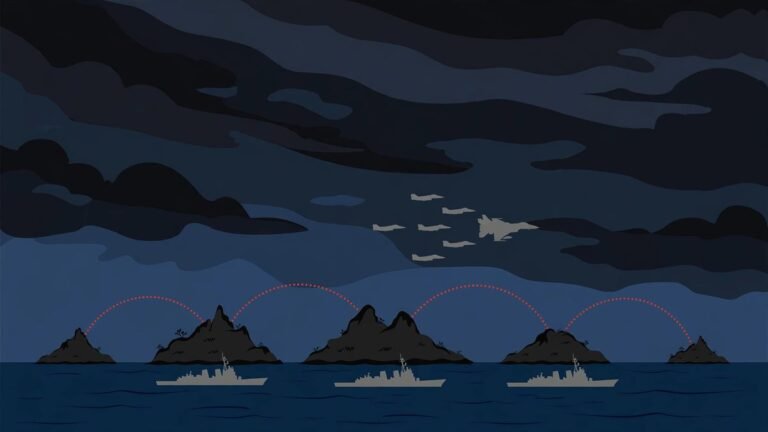
[…] options — sabotage, cyber disruption, disinformation around specific projects — the core of Russia’s hybrid warfare toolkit — which is exactly the category of “below the armed aggression threshold” activity […]