
The landscape of military intelligence has undergone a profound transformation in the past decade, driven by the explosive growth of digital information and advanced analytical tools. Open Source Intelligence (OSINT) has emerged from the shadows of traditional espionage to become a cornerstone of modern military and geopolitical analysis. Once considered a supplementary discipline, OSINT now sits at the forefront of intelligence gathering, fundamentally reshaping how nations understand conflicts, assess threats, and make strategic decisions.
The Origins of OSINT
The concept of gathering intelligence from publicly available sources is not new. During World War II, Allied intelligence units monitored German radio broadcasts and analyzed newspapers to track troop movements and industrial production. The BBC Monitoring Service, established in 1939, remains one of the earliest dedicated OSINT organizations. However, the scale and scope of modern OSINT bear little resemblance to these analog-era efforts.
The end of the Cold War marked a turning point. As the Iron Curtain fell, vast amounts of formerly classified information became accessible, and the internet began its rapid expansion. Intelligence agencies that had relied primarily on Human Intelligence (HUMINT) and Signal Intelligence (SIGINT) suddenly found themselves awash in publicly available data. The challenge shifted from collection to analysis.

The Digital Revolution in Intelligence
The arrival of social media platforms, satellite imagery providers, and real-time communication tools has fundamentally altered the intelligence landscape. Platforms like Twitter, Telegram, and YouTube have become invaluable sources of ground-level information during conflicts. When war broke out in Ukraine in February 2022, analysts around the world used geolocated social media posts, satellite images from commercial providers like Maxar Technologies, and real-time video footage to track Russian troop movements with remarkable accuracy.
The Role of Commercial Satellite Imagery
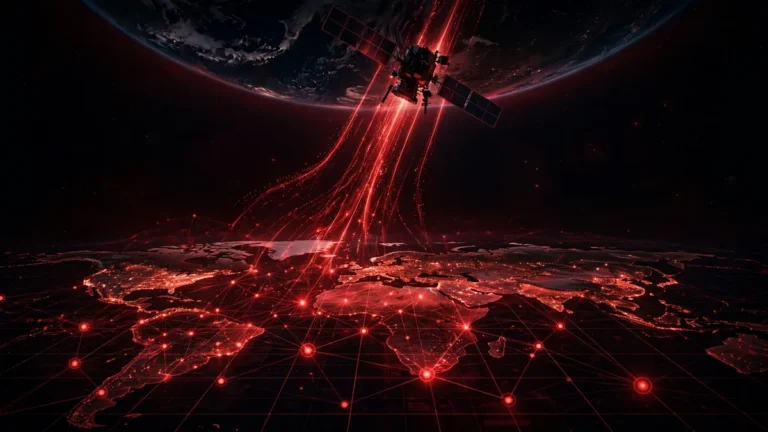
One of the most significant developments in modern OSINT has been the democratization of satellite imagery. Companies such as Planet Labs, Maxar, and Airbus Defence and Space now offer high-resolution imagery at prices that governments and even independent researchers can afford. During the Russia-Ukraine war, commercial satellite images revealed the buildup of Russian forces along Ukraine borders weeks before the invasion, providing the world with undeniable evidence of impending aggression.
This represents a paradigm shift. Historically, satellite reconnaissance was the exclusive domain of superpowers with dedicated intelligence satellites. Today, a researcher with an internet connection can access imagery that rivals what national intelligence agencies possessed just two decades ago. Geospatial Intelligence (GEOINT) has effectively been crowdsourced, enabling organizations like Bellingcat and independent analysts to conduct investigations that once required government-level resources.
Social Media as an Intelligence Goldmine
Social media platforms have become indispensable tools for OSINT practitioners. During conflict situations, soldiers, civilians, and journalists often upload photographs and videos that contain valuable metadata, including GPS coordinates, timestamps, and device information. By cross-referencing this data with satellite imagery and terrain analysis, investigators can verify claims, track military movements, and document war crimes with forensic precision.

Telegram has proven particularly valuable in the context of modern conflicts. Both Russian and Ukrainian forces maintain extensive Telegram channels where they post operational updates, combat footage, and propaganda. OSINT analysts monitor these channels in real time, filtering through vast amounts of information to identify actionable intelligence. Bellingcat investigations into Malaysia Airlines Flight MH17 and the identification of Russian military units operating in Ukraine demonstrated the power of social media OSINT on a global stage.
AI and Machine Learning in OSINT
Artificial intelligence is revolutionizing OSINT analysis at an accelerating pace. The sheer volume of publicly available data far exceeds the capacity of human analysts to process effectively. AI-powered tools can now scan millions of social media posts, news articles, and satellite images in minutes, identifying patterns and anomalies that would take human analysts weeks to discover.
Natural Language Processing (NLP) algorithms enable automated translation and sentiment analysis across dozens of languages simultaneously. During the early stages of the COVID-19 pandemic, OSINT platforms using NLP tracked the spread of disinformation across linguistic boundaries, helping public health officials understand emerging narratives and conspiracy theories. In military contexts, NLP tools monitor foreign-language media for indicators of changing political sentiment, military readiness, or public support for conflicts.
Computer vision algorithms have transformed satellite imagery analysis. Where human analysts once painstakingly examined individual frames, machine learning models can now automatically detect vehicles, aircraft, naval vessels, and infrastructure changes across thousands of square kilometers. These systems can identify newly constructed military installations, track convoy movements, and even estimate equipment types based on visual signatures.
OSINT in Modern Conflict Zones
The application of OSINT in active conflict zones has become increasingly sophisticated. In Syria, OSINT analysts tracked the movements of Islamic State forces, documented the use of chemical weapons, and verified claims of territorial control. The Syrian conflict demonstrated that OSINT could operate effectively even in information environments dominated by propaganda and disinformation.
The Nagorno-Karabakh conflict between Armenia and Azerbaijan in 2020 showcased the role of drone footage as an OSINT source. Azerbaijan released extensive video evidence of drone strikes against Armenian positions, which OSINT analysts geolocated and verified using satellite imagery and terrain analysis. This allowed independent observers to assess the effectiveness of drone warfare in real time.
The Israel-Hamas conflict has further demonstrated OSINT evolution. Analysts use Telegram channels, Twitter posts, and live news feeds to track rocket launches, Iron Dome interceptions, and ground operations. The ability to independently verify claims from both sides of the conflict has made OSINT an essential tool for journalists, humanitarian organizations, and policymakers seeking to understand events on the ground.
Ethical and Legal Considerations
The growing power of OSINT raises important ethical questions. The boundary between publicly available information and personal privacy is often blurred. Military personnel posting photographs on social media may inadvertently reveal sensitive information about troop positions, equipment capabilities, or operational security. Intelligence agencies must balance the value of OSINT against the need to protect individual privacy rights and comply with legal frameworks.
There is also the challenge of disinformation. Adversaries increasingly plant false information in publicly accessible channels specifically to mislead OSINT analysts. The concept of reflexive control in Russian military doctrine explicitly involves feeding deceptive information into open sources to shape enemy decision-making. OSINT practitioners must therefore develop sophisticated verification methodologies to distinguish genuine intelligence from carefully crafted deception.
The Future of OSINT
Looking ahead, OSINT will likely become even more integral to military intelligence operations. Several trends are converging to accelerate this evolution:
- Increased Sensor Coverage: The proliferation of Internet of Things devices, environmental sensors, and commercial monitoring systems will generate exponentially more publicly available data.
- Advanced AI Integration: Next-generation AI systems will be capable of predictive analysis, identifying emerging threats before they materialize based on subtle patterns in open-source data.
- Deepfake Countermeasures: As synthetic media becomes more sophisticated, OSINT tools will need to incorporate advanced authentication technologies to verify the authenticity of visual and audio evidence.
- Collaborative Platforms: The OSINT community is becoming increasingly networked, with platforms enabling real-time collaboration between analysts across national boundaries and institutional affiliations.
Conclusion
Open Source Intelligence has evolved from a peripheral discipline into a central pillar of modern military and geopolitical analysis. The democratization of information technology, combined with advances in AI and satellite imagery, has placed unprecedented analytical power in the hands of intelligence agencies, journalists, and independent researchers alike. As conflicts become increasingly digitized and information warfare intensifies, OSINT will only grow in importance.
For defense professionals, policymakers, and security analysts, understanding OSINT is no longer optional. Those who master the tools and methodologies of open source intelligence will be better equipped to navigate the complex information environments of 21st-century conflict.
Stay informed with the latest intelligence analysis and geopolitical insights at WarBrief Analysis. For daily updates on global conflicts and security developments, subscribe to our Daily Brief.
Advanced OSINT Tools and Platforms
The proliferation of dedicated OSINT platforms has lowered the barrier to entry for intelligence analysis. Tools like Maltego, which visualizes relationships between entities across multiple data sources, and SpiderFoot, which automates reconnaissance across hundreds of public data sources, have become standard equipment for both professional analysts and hobbyist investigators. The development of specialized OSINT frameworks, including the Berkeley OSINT framework and the OSINT Flowchart, has helped standardize methodologies and improve analytical rigor across the field.
Social media analysis tools have become particularly sophisticated. Platforms like SocialBearing and TweetDeck enable real-time monitoring of Twitter conversations, sentiment analysis, and network mapping. Geolocation tools, combined with image analysis software, allow analysts to pinpoint the exact location where photographs and videos were taken. Reverse image search engines like TinEye and Google Images can trace the origin and history of visual content, helping to verify authenticity and identify disinformation.
Dark web monitoring has also become an important OSINT capability. While the dark web presents significant technical and legal challenges, specialized tools and platforms allow analysts to monitor extremist forums, illicit marketplaces, and criminal networks that operate beyond the reach of standard search engines. Intelligence agencies have developed capabilities to de-anonymize dark web users and track communications across encrypted platforms, though these capabilities are closely guarded and their use is subject to strict legal oversight.
OSINT Verification Methodologies
Verification is the most critical challenge in OSINT analysis. The abundance of publicly available information includes vast quantities of misinformation, disinformation, and genuine error. Professional OSINT analysts employ rigorous verification methodologies that include cross-referencing multiple independent sources, geolocation analysis of visual content, temporal analysis of information flows, and technical analysis of digital artifacts.
Geolocation has emerged as a particularly powerful verification technique. By analyzing the position of the sun, shadows, vegetation, terrain features, and infrastructure visible in photographs and videos, analysts can determine the precise location where content was captured. This technique was instrumental in documenting Russian military operations in Ukraine, enabling analysts to track the movement of specific military units across the battlefield with remarkable precision.
Chronolocation, the analysis of temporal markers within content, provides another verification dimension. Clock faces, calendar dates, weather conditions, and time-stamped events visible in visual media help analysts establish when content was created. By cross-referencing geolocation and chronolocation data with known military movements or reported incidents, analysts can authenticate or debunk claims with high confidence.
Technical verification methods have also advanced significantly. Metadata analysis can reveal when and with what device a photograph was taken, though sophisticated actors increasingly strip or falsify metadata. File hash analysis can identify known content and track its spread across the internet. Deepfake detection tools, while still evolving, can identify synthetic media through analysis of inconsistent lighting, unusual facial movements, and digital artifacts that betray AI-generated content.
Governments and OSINT Integration
National intelligence agencies have increasingly integrated OSINT into their formal intelligence processes. The United States established the Open Source Intelligence Center within the CIA in 2021, consolidating OSINT capabilities that had previously been distributed across multiple agencies. The UK Defence Intelligence has expanded its OSINT capabilities significantly, recognizing the value of open source information in complementing classified intelligence collection methods.
The integration of OSINT with traditional intelligence disciplines has produced significant benefits. OSINT can cue classified collection assets by identifying potentially interesting targets or locations that warrant closer examination through SIGINT or satellite reconnaissance. Conversely, classified intelligence can help validate OSINT findings and provide context that enhances their analytical value. The fusion of OSINT with HUMINT, SIGINT, and GEOINT creates a more comprehensive intelligence picture than any single discipline could provide alone.
However, challenges remain. Intelligence agencies must develop doctrinal frameworks that appropriately value and protect OSINT sources. The classification system, designed for traditional intelligence sources, may not adequately recognize the unique characteristics of open source information. Analysts trained in classified disciplines may require new skills and mindsets to effectively leverage OSINT. Despite these challenges, the trajectory toward deeper OSINT integration is clear and irreversible.
[…] WarBrief Live | October 6, 2026 | OSINT Tradecraft That tradecraft sits within how OSINT grew into a core intelligence discipline. […]