
Urban warfare has become the predominant form of military conflict in the 21st century. As the world population becomes increasingly urbanized, military forces are increasingly called upon to conduct operations in cities, towns, and dense settlements. The battles for Mosul, Raqqa, Mariupol, Bakhmut, and Gaza have demonstrated the extreme challenges of urban combat, where tactical complexity, civilian presence, and infrastructure density combine to create the most demanding environment for military operations.
The Strategic Significance of Urban Warfare
Cities have always held strategic significance in conflict, but demographic trends have made urban warfare increasingly unavoidable. More than half the world population now lives in urban areas, a proportion that continues to grow. Military forces seeking to control territory, protect populations, or destroy adversary capabilities must be prepared to operate in urban environments. Adversaries recognizing the difficulty of urban operations may deliberately seek to draw conventional forces into cities to negate technological advantages and maximize defender benefits.
Urban terrain fundamentally alters the character of military operations. The three-dimensional battlespace, with multiple levels including underground infrastructure, street level, and elevated positions, complicates maneuver and situational awareness. Dense construction provides extensive cover and concealment for defenders. Civilian presence restricts the use of firepower and complicates targeting. Communications can be disrupted by buildings and infrastructure. Navigation becomes difficult in unfamiliar urban environments.
Evolution of Urban Warfare Tactics
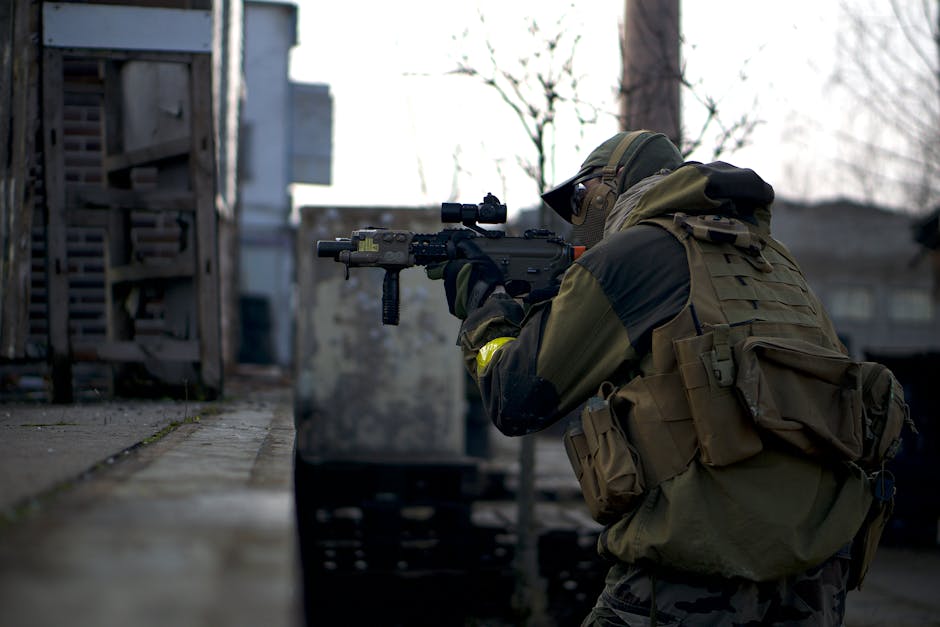
Military tactics have evolved significantly in response to the challenges of urban combat. The traditional approach of clearing buildings room by room has been supplemented by more sophisticated methods that emphasize intelligence-driven operations, precision fire, and the integration of specialized capabilities.
Breaching operations have become more sophisticated. Armored bulldozers and demolition charges create access points through walls rather than entering through doorways and windows that are likely covered by enemy fire. Precision munitions enable the engagement of specific rooms or floors within buildings while minimizing collateral damage. The use of smoke and obscurants provides cover for maneuvering forces in open areas such as streets and squares.
Technology in Urban Operations
Technology has transformed urban warfare capabilities. Drones provide persistent overhead surveillance, enabling commanders to track enemy movements and adjust tactics in real time. Small quadcopters can clear rooms and floors before ground forces enter, reducing risk to personnel. Ground robots can investigate suspicious objects, clear tunnels, and conduct reconnaissance in dangerous environments.
Sensors and surveillance systems have dramatically improved situational awareness in urban environments. Acoustic sensors can detect and locate sniper fire. Thermal imaging systems can identify hidden combatants through walls and other obstacles. Networked sensor systems can track movements across entire urban sectors, providing commanders with a common operating picture that was unimaginable in previous urban conflicts.
Humanitarian Challenges
The humanitarian consequences of urban warfare are devastating. Civilian casualties in urban conflicts account for a disproportionate share of total conflict-related deaths. The destruction of critical infrastructure, including water systems, electrical grids, hospitals, and schools, creates long-term humanitarian crises that persist long after active hostilities cease. The displacement of civilian populations, often numbering in the hundreds of thousands or millions, creates refugee crises that destabilize entire regions.
International humanitarian law imposes specific obligations on parties to urban conflicts. The principles of distinction, proportionality, and precaution require combatants to distinguish between military objectives and civilian objects, to avoid disproportionate harm to civilians, and to take all feasible precautions to minimize civilian casualties. The challenge of complying with these obligations in complex urban environments is immense, and violations have been documented in virtually every major urban conflict of the 21st century.
Lessons from Recent Conflicts
The battle for Mosul against the Islamic State demonstrated the importance of intelligence, precision fire, and partner forces in urban operations. The siege of Mariupol showed the devastating effects of siege warfare in an urban environment. The battles for Bakhmut and Avdiivka in Ukraine demonstrated the grinding nature of urban attrition warfare in the era of drones and precision artillery. The conflict in Gaza highlighted the challenges of urban operations against an adversary embedded in extensive tunnel networks and civilian infrastructure.
Conclusion
Urban warfare will continue to define the character of military conflict in the 21st century. The combination of demographic trends, adversary strategies, and the tactical advantages of urban terrain ensures that military forces will be called upon to conduct operations in cities with increasing frequency. The humanitarian costs of urban conflict demand that military planners and policymakers prioritize the protection of civilians and the preservation of critical infrastructure. Understanding the dynamics of urban warfare is essential for military professionals, humanitarian organizations, and anyone concerned with the human cost of conflict.
For ongoing coverage of urban warfare and global conflicts, visit our Analysis section. Subscribe to the Daily Brief for updates on conflict developments worldwide.
Case Studies and Practical Applications
The practical application of these technologies and strategies has been demonstrated across multiple conflict zones and security scenarios. In each case, the specific challenges and lessons learned provide valuable insights for practitioners and policymakers seeking to understand the evolving landscape of modern military and security operations.
The conflict in Ukraine has served as a particularly rich source of operational lessons. Both conventional and unconventional capabilities have been tested in high-intensity combat, revealing strengths and weaknesses that were previously theoretical. The ability to rapidly adapt tactics, technology, and organization in response to battlefield realities has proven essential, while rigid doctrinal approaches have often resulted in failure. This adaptability requires not only flexible systems but also a culture that encourages innovation and learning at all levels of military organization.
Interoperability between allied forces has emerged as a critical success factor. NATO forces operating alongside partner nations have demonstrated that common standards, shared procedures, and compatible equipment significantly enhance operational effectiveness. Exercises and training programs that build interoperability before deployment are essential investments that pay dividends in actual operations. The ability to share intelligence, coordinate fires, and conduct joint maneuver operations across national boundaries multiplies the combat power available to any single nation.
The role of private sector technology companies in modern military operations has expanded dramatically. Commercial satellite imagery, cloud computing services, artificial intelligence platforms, and communications infrastructure provided by companies like SpaceX, Microsoft, Amazon, and Maxar have become integral to military operations. This dependence creates new vulnerabilities and dependencies that military planners must carefully manage, ensuring that access to critical commercial capabilities is maintained during crises.
Training and education remain fundamental to military effectiveness despite technological advances. The complexity of modern military operations demands highly skilled personnel capable of operating sophisticated systems, making rapid decisions under pressure, and adapting to unforeseen circumstances. Investment in simulation-based training, professional military education, and experiential learning programs produces the human capital that ultimately determines military success or failure.
The strategic implications of these developments extend beyond the battlefield. Military capabilities shape diplomatic relationships, influence alliance dynamics, and affect the calculations of potential adversaries. Nations that successfully integrate emerging technologies while maintaining ready and capable conventional forces will be better positioned to deter aggression, protect their interests, and shape the international security environment in ways favorable to their strategic objectives.
Strategic Implications and Policy Recommendations
The strategic implications of these developments extend far beyond the immediate operational considerations. Policymakers must grapple with fundamental questions about the nature of security in an era of rapid technological change, shifting power distributions, and evolving threats. The decisions made today will shape the security environment for decades to come, and getting these decisions right requires careful analysis of both opportunities and risks.
Investment in human capital is perhaps the most important strategic priority. Technology is only as effective as the people who develop, operate, and employ it. Military and intelligence organizations must attract and retain talented personnel with the skills needed to succeed in an increasingly technical and complex environment. This requires competitive compensation, challenging career paths, and organizational cultures that value innovation and critical thinking.
International cooperation remains essential despite the competitive dynamics of the current strategic environment. Many security challenges, including terrorism, cyber threats, and WMD proliferation, cannot be addressed by any single nation acting alone. Intelligence sharing, joint military exercises, and collaborative technology development multiply the effectiveness of national investments and build the trust necessary for effective alliance operations.
The private sector will play an increasingly important role in national security. Governments must develop effective frameworks for partnering with technology companies, defense contractors, and academic institutions to leverage innovation and maintain technological advantage. These partnerships must balance the need for security and secrecy against the benefits of open innovation and commercial dynamism that have made the technology sector so successful.
Resilience must be built into national security systems at every level. The ability to continue operating under attack, to recover quickly from disruptions, and to adapt to changing circumstances is essential in an era of persistent competition and conflict. This requires redundant systems, distributed architectures, robust supply chains, and organizational cultures that embrace learning from failure.



Discussion 0
Share analysis, corrections, or context. Be civil — comments are moderated.