
Military drones have undergone one of the most rapid and consequential evolutions in the history of warfare. In less than two decades, unmanned aerial vehicles have transformed from niche reconnaissance platforms into central instruments of military power, capable of conducting precision strikes, electronic warfare, and intelligence collection across the full spectrum of conflict. The proliferation of drone technology is reshaping military strategy, operational tactics, and the very nature of armed conflict.
The Evolution of Drone Technology
The use of unmanned aircraft for military purposes dates back to the early 20th century, but modern drone warfare began with the development of the Predator series by General Atomics in the 1990s. Initially designed as a surveillance platform, the Predator was armed with Hellfire missiles following the September 11 attacks, inaugurating the era of armed drone operations. The MQ-9 Reaper, which followed, offered significantly greater payload capacity, endurance, and sensor capability, becoming the backbone of US counterterrorism operations.
The technology has since proliferated widely. Turkey Bayraktar TB2 demonstrated remarkable effectiveness in conflicts in Syria, Libya, Nagorno-Karabakh, and Ukraine, showcasing the capabilities of mid-tier drone systems at accessible price points. China has emerged as a major drone exporter, with systems like the CH-4 and Wing Loong finding customers across Asia, Africa, and the Middle East. Iran has developed a sophisticated drone capability that has been employed by proxy forces across the region.

Surveillance and Intelligence Collection
The surveillance capabilities of modern military drones are extraordinary. Equipped with electro-optical and infrared cameras, synthetic aperture radar, and signals intelligence equipment, drones can monitor vast areas for extended periods. The Global Hawk high-altitude long-endurance drone can stay aloft for over 30 hours at altitudes above 60,000 feet, providing persistent surveillance coverage of entire regions.
The integration of artificial intelligence has dramatically enhanced drone surveillance capabilities. AI-powered computer vision systems can automatically detect, classify, and track targets across multiple video feeds simultaneously. These systems can identify specific vehicle types, detect changes in terrain, and flag anomalous behavior patterns that might indicate hostile activity. The combination of persistent surveillance and automated analysis has transformed the intelligence collection landscape.
Strike Capabilities
The evolution from surveillance to strike capability has been the most significant development in military drone technology. Modern armed drones carry a variety of precision-guided munitions, including air-to-ground missiles, laser-guided bombs, and loitering munitions that can search for and engage targets autonomously. The ability to maintain persistent surveillance over a target area and then strike with precision when the opportunity presents itself has fundamentally changed the character of counterterrorism and counterinsurgency operations.
The use of drones in conventional conflicts has expanded dramatically. In Ukraine, both sides employ drones for artillery spotting, battlefield surveillance, and direct strikes. First-person-view racing drones converted into munitions have proven surprisingly effective against armored vehicles and fortified positions. Long-range strike drones have been used to attack targets deep behind enemy lines, including oil refineries, airfields, and ammunition depots.

Loitering Munitions
Loitering munitions, sometimes called suicide drones or kamikaze drones, represent a particularly significant development. These systems can orbit over a target area for extended periods, waiting for a target to appear before diving in to destroy it. The Switchblade system, provided to Ukraine by the United States, exemplifies this category. Loitering munitions combine the persistence of surveillance drones with the lethality of precision munitions, creating a new category of weapon that blurs the line between drones and missiles.
Counter-Drone Systems
The proliferation of drones has driven the development of counter-drone technologies. Electronic warfare systems can jam drone control signals or GPS navigation. Directed energy weapons, including lasers and high-power microwaves, can destroy drones in flight. Kinetic interceptors, including specially designed missiles and even trained eagles, provide additional options. The cat-and-mouse dynamic between drones and countermeasures continues to drive technological innovation on both sides.
The Future of Military Drones
Several trends will shape the future of military drone capabilities. Autonomous swarm operations will enable coordinated attacks by large numbers of drones operating without direct human control. Improved endurance through advanced propulsion systems, including hydrogen fuel cells and solar power, will extend operational persistence. Enhanced connectivity through satellite networks like Starlink will enable beyond-line-of-sight operations and real-time global command and control.
The human role in drone operations will continue to evolve. While current systems maintain human operators in the loop for targeting decisions, increasing automation is moving humans to supervisory roles. The debate over fully autonomous lethal drones continues, with significant implications for military ethics, international law, and strategic stability.
Conclusion
Military drones have fundamentally transformed modern warfare, evolving from niche surveillance platforms into versatile systems that dominate the battlefield. Their proliferation raises important questions about the future of conflict, the ethics of remote warfare, and the implications of increasingly autonomous systems. Understanding drone technology and its strategic implications is essential for military professionals, policymakers, and anyone concerned with the future of warfare.
For more analysis of drone warfare and military technology, visit our Analysis section. Subscribe to the Daily Brief for updates on global conflicts and defense developments.
Case Studies and Practical Applications
The practical application of these technologies and strategies has been demonstrated across multiple conflict zones and security scenarios. In each case, the specific challenges and lessons learned provide valuable insights for practitioners and policymakers seeking to understand the evolving landscape of modern military and security operations.
The conflict in Ukraine has served as a particularly rich source of operational lessons. Both conventional and unconventional capabilities have been tested in high-intensity combat, revealing strengths and weaknesses that were previously theoretical. The ability to rapidly adapt tactics, technology, and organization in response to battlefield realities has proven essential, while rigid doctrinal approaches have often resulted in failure. This adaptability requires not only flexible systems but also a culture that encourages innovation and learning at all levels of military organization.
Interoperability between allied forces has emerged as a critical success factor. NATO forces operating alongside partner nations have demonstrated that common standards, shared procedures, and compatible equipment significantly enhance operational effectiveness. Exercises and training programs that build interoperability before deployment are essential investments that pay dividends in actual operations. The ability to share intelligence, coordinate fires, and conduct joint maneuver operations across national boundaries multiplies the combat power available to any single nation.
The role of private sector technology companies in modern military operations has expanded dramatically. Commercial satellite imagery, cloud computing services, artificial intelligence platforms, and communications infrastructure provided by companies like SpaceX, Microsoft, Amazon, and Maxar have become integral to military operations. This dependence creates new vulnerabilities and dependencies that military planners must carefully manage, ensuring that access to critical commercial capabilities is maintained during crises.
Training and education remain fundamental to military effectiveness despite technological advances. The complexity of modern military operations demands highly skilled personnel capable of operating sophisticated systems, making rapid decisions under pressure, and adapting to unforeseen circumstances. Investment in simulation-based training, professional military education, and experiential learning programs produces the human capital that ultimately determines military success or failure.
The strategic implications of these developments extend beyond the battlefield. Military capabilities shape diplomatic relationships, influence alliance dynamics, and affect the calculations of potential adversaries. Nations that successfully integrate emerging technologies while maintaining ready and capable conventional forces will be better positioned to deter aggression, protect their interests, and shape the international security environment in ways favorable to their strategic objectives.
Strategic Implications and Policy Recommendations
The strategic implications of these developments extend far beyond the immediate operational considerations. Policymakers must grapple with fundamental questions about the nature of security in an era of rapid technological change, shifting power distributions, and evolving threats. The decisions made today will shape the security environment for decades to come, and getting these decisions right requires careful analysis of both opportunities and risks.
Investment in human capital is perhaps the most important strategic priority. Technology is only as effective as the people who develop, operate, and employ it. Military and intelligence organizations must attract and retain talented personnel with the skills needed to succeed in an increasingly technical and complex environment. This requires competitive compensation, challenging career paths, and organizational cultures that value innovation and critical thinking.
International cooperation remains essential despite the competitive dynamics of the current strategic environment. Many security challenges, including terrorism, cyber threats, and WMD proliferation, cannot be addressed by any single nation acting alone. Intelligence sharing, joint military exercises, and collaborative technology development multiply the effectiveness of national investments and build the trust necessary for effective alliance operations.
The private sector will play an increasingly important role in national security. Governments must develop effective frameworks for partnering with technology companies, defense contractors, and academic institutions to leverage innovation and maintain technological advantage. These partnerships must balance the need for security and secrecy against the benefits of open innovation and commercial dynamism that have made the technology sector so successful.
Resilience must be built into national security systems at every level. The ability to continue operating under attack, to recover quickly from disruptions, and to adapt to changing circumstances is essential in an era of persistent competition and conflict. This requires redundant systems, distributed architectures, robust supply chains, and organizational cultures that embrace learning from failure.
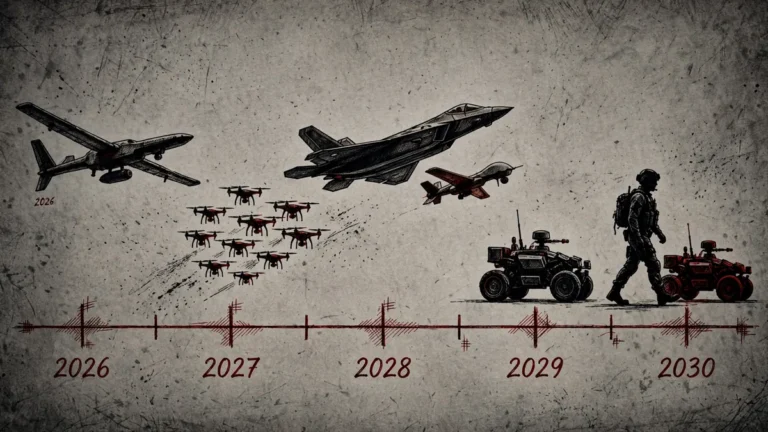


[…] data. In Ukraine, small AI models trained on battlefield data run on cheap chips aboard drones, helping them recognize targets and resist jamming. Reporting on the 2026 Iran conflict described […]
[…] Defense has adapted too: interceptor drones that hunt other drones, anti-drone netting draped over Ukrainian roads and cities, and directed-energy weapons like Israel’s Iron Beam laser, reported to cost only a few dollars per shot. Read our full guide to military drones, from surveillance to strike. […]
[…] terminal guidance on onboard cameras to target recognition and GPS-jamming-resistant navigation. Military drones have evolved from surveillance tools into the war’s central strike weapon, and AI is the […]