
The Indo-Pacific region has become the defining arena of 21st-century geopolitical competition. Stretching from the Indian Ocean to the western Pacific, this vast maritime domain hosts the world busiest trade routes, most contested territorial claims, and largest concentration of naval power in human history. The strategic importance of the Indo-Pacific cannot be overstated, and the nations competing for influence in this region are investing heavily in naval capabilities to secure their interests.
The Strategic Significance of the Indo-Pacific
The Indo-Pacific region accounts for approximately 60 percent of global GDP and hosts eight of the world ten largest standing armies. More than 80 percent of global trade by volume passes through Indo-Pacific waters, with the South China Sea alone facilitating over three trillion dollars in annual shipping traffic. Control over the sea lines of communication that traverse this region represents one of the most critical strategic objectives for any major power.
China assertiveness in the South China Sea has been the primary driver of naval modernization across the region. Beijing construction of artificial islands, deployment of anti-ship missile systems, and aggressive enforcement of its expansive territorial claims have triggered a cascade of military responses from neighboring nations and extra-regional powers alike.

Naval Modernization Programs
China navy has undergone the most dramatic expansion in modern naval history. The People Liberation Army Navy has grown from a coastal defense force into a blue-water navy capable of projecting power across the Indo-Pacific. With approximately 370 vessels, including three aircraft carriers, numerous destroyers, frigates, and submarines, the PLAN now surpasses the United States Navy in total hull count.
The United States maintains qualitative superiority through its eleven aircraft carrier strike groups, advanced submarine fleet, and global network of allied bases. However, the US Navy face growing challenges from Chinese anti-access and area denial systems designed to keep American forces at bay. The development of hypersonic missiles, advanced submarines, and long-range precision strike capabilities has raised the stakes of any potential naval confrontation.
Regional navies are also modernizing at an unprecedented pace. Japan has converted its Izumo-class helicopter destroyers into de facto aircraft carriers capable of operating F-35B fighters. Australia has embarked on the largest naval modernization program in its history, including nuclear-powered submarines under the AUKUS partnership. India navy has expanded its carrier capability and submarine fleet to maintain dominance in the Indian Ocean.
Flashpoints and Potential Conflict Zones
The South China Sea
The South China Sea remains the most volatile maritime flashpoint. China territorial claims conflict with those of Brunei, Malaysia, the Philippines, Taiwan, and Vietnam. The 2016 Permanent Court of Arbitration ruling rejecting China claims has done little to alter the strategic calculus. Frequent incidents involving Chinese vessels and those of other claimants, including the Philippines, continue to risk escalation.

The Taiwan Strait
The Taiwan Strait represents perhaps the most dangerous potential flashpoint in the Indo-Pacific. China has repeatedly stated its intention to reunify Taiwan by force if necessary, and Chinese military exercises around the island have increased in frequency and intensity. Any blockade, invasion, or significant military incident involving Taiwan would draw in the United States and its allies, potentially triggering a conflict with global consequences. Taipei is also building a “second navy” out of its Coast Guard to answer China’s gray-zone pressure below the threshold of war.
The Korean Peninsula
North Korea nuclear weapons program and missile tests continue to destabilize Northeast Asia. The threat posed by North Korean ballistic missiles capable of reaching US territory has driven the deployment of Terminal High Altitude Area Defense systems and increased trilateral security cooperation between the United States, Japan, and South Korea.
Alliance Structures and Security Architecture
The Indo-Pacific security architecture is characterized by a complex web of alliances and partnerships. The United States maintains bilateral alliances with Japan, South Korea, Australia, the Philippines, and Thailand. The AUKUS pact between Australia, the United Kingdom, and the United States represents a significant enhancement of trilateral security cooperation, particularly in submarine technology and advanced capabilities.
The Quadrilateral Security Dialogue, comprising the United States, Japan, Australia, and India, has evolved from a informal consultation mechanism into a framework for practical cooperation on maritime security, infrastructure, and technology. ASEAN remains central to the regional security architecture, though its consensus-based decision-making has limited its effectiveness in addressing hard security challenges.
Conclusion
Naval dominance in the Indo-Pacific will continue to shape global security for decades to come. The convergence of great power competition, territorial disputes, and rapid military modernization creates a volatile strategic environment where miscalculation could have catastrophic consequences. Understanding the dynamics of naval competition in this region is essential for anyone concerned with international security, defense strategy, or geopolitical analysis.
Track the latest developments in Indo-Pacific security and naval affairs through our Analysis section. For real-time updates on global conflicts, subscribe to the WarBrief Daily Brief.
Case Studies and Practical Applications
The practical application of these technologies and strategies has been demonstrated across multiple conflict zones and security scenarios. In each case, the specific challenges and lessons learned provide valuable insights for practitioners and policymakers seeking to understand the evolving landscape of modern military and security operations.
The conflict in Ukraine has served as a particularly rich source of operational lessons. Both conventional and unconventional capabilities have been tested in high-intensity combat, revealing strengths and weaknesses that were previously theoretical. The ability to rapidly adapt tactics, technology, and organization in response to battlefield realities has proven essential, while rigid doctrinal approaches have often resulted in failure. This adaptability requires not only flexible systems but also a culture that encourages innovation and learning at all levels of military organization.
Interoperability between allied forces has emerged as a critical success factor. NATO forces operating alongside partner nations have demonstrated that common standards, shared procedures, and compatible equipment significantly enhance operational effectiveness. Exercises and training programs that build interoperability before deployment are essential investments that pay dividends in actual operations. The ability to share intelligence, coordinate fires, and conduct joint maneuver operations across national boundaries multiplies the combat power available to any single nation.
The role of private sector technology companies in modern military operations has expanded dramatically. Commercial satellite imagery, cloud computing services, artificial intelligence platforms, and communications infrastructure provided by companies like SpaceX, Microsoft, Amazon, and Maxar have become integral to military operations. This dependence creates new vulnerabilities and dependencies that military planners must carefully manage, ensuring that access to critical commercial capabilities is maintained during crises.
Training and education remain fundamental to military effectiveness despite technological advances. The complexity of modern military operations demands highly skilled personnel capable of operating sophisticated systems, making rapid decisions under pressure, and adapting to unforeseen circumstances. Investment in simulation-based training, professional military education, and experiential learning programs produces the human capital that ultimately determines military success or failure.
The strategic implications of these developments extend beyond the battlefield. Military capabilities shape diplomatic relationships, influence alliance dynamics, and affect the calculations of potential adversaries. Nations that successfully integrate emerging technologies while maintaining ready and capable conventional forces will be better positioned to deter aggression, protect their interests, and shape the international security environment in ways favorable to their strategic objectives.
Strategic Implications and Policy Recommendations
The strategic implications of these developments extend far beyond the immediate operational considerations. Policymakers must grapple with fundamental questions about the nature of security in an era of rapid technological change, shifting power distributions, and evolving threats. The decisions made today will shape the security environment for decades to come, and getting these decisions right requires careful analysis of both opportunities and risks.
Investment in human capital is perhaps the most important strategic priority. Technology is only as effective as the people who develop, operate, and employ it. Military and intelligence organizations must attract and retain talented personnel with the skills needed to succeed in an increasingly technical and complex environment. This requires competitive compensation, challenging career paths, and organizational cultures that value innovation and critical thinking.
International cooperation remains essential despite the competitive dynamics of the current strategic environment. Many security challenges, including terrorism, cyber threats, and WMD proliferation, cannot be addressed by any single nation acting alone. Intelligence sharing, joint military exercises, and collaborative technology development multiply the effectiveness of national investments and build the trust necessary for effective alliance operations.
The private sector will play an increasingly important role in national security. Governments must develop effective frameworks for partnering with technology companies, defense contractors, and academic institutions to leverage innovation and maintain technological advantage. These partnerships must balance the need for security and secrecy against the benefits of open innovation and commercial dynamism that have made the technology sector so successful.
Resilience must be built into national security systems at every level. The ability to continue operating under attack, to recover quickly from disruptions, and to adapt to changing circumstances is essential in an era of persistent competition and conflict. This requires redundant systems, distributed architectures, robust supply chains, and organizational cultures that embrace learning from failure.


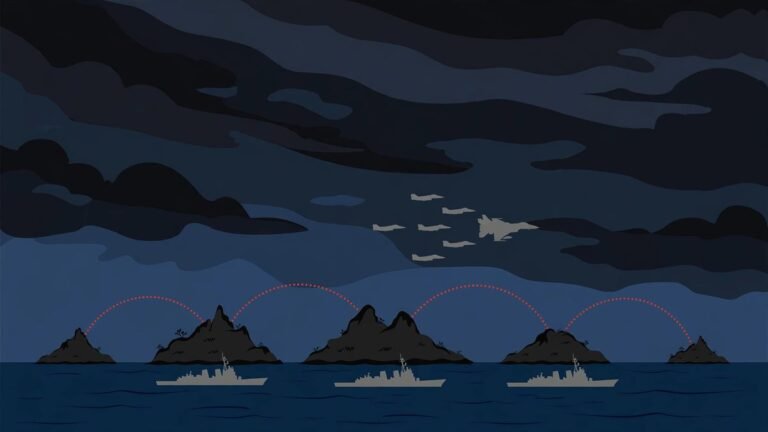
[…] in any future blockade, while raising the risk premiums shippers quietly price into routes. See our analysis of naval dominance in the Indo-Pacific and the conflict zones hub for the wider maritime […]
[…] For deeper context on how regional military balances shape deterrence, see our analysis of naval power in the Indo-Pacific. […]